
healthy lifestyles
“You don’t have to have a sea view”
Researchers have found that the closer people live to the sea, the healthier they tend to be.
However, it is not just those who live in rural seaside areas that benefit.
The biggest effect is actually felt by people living in coastal cities like Newcastle and Southampton, compared to inland ones like Birmingham and Leeds.
It was not sure how much of the benefit had to do with salty air.
It’s thought that it could be that the sea had a calming influence on people, or that those who lived near it had an added incentive to get out and about.
Information from the 2001 census compared the health of people in England living near the sea and far away, both in rural and urban areas.
In the census respondents were required to rate their health as ‘good’, ‘fairly good’, or ‘not good’. Nationwide, just over two-thirds (69 per cent) rated it as ‘good’.
However, those living within three miles (5km) of the coast were slightly more likely to rate their health highly, compared to those living more than 30 miles (50km) inland.
The effect extended to those living in the band 12 to 30 miles (20-50km) from the sea, although less strongly.
Researchers concluded “You don’t have to have a sea view to benefit.”
The results suggested what was important was how often people got to the coast, and how woven it was into their lives.
The study, published in the journal Health and Place, took account of variations in age and wealth between different areas’ populations.
It showed living by the sea most benefits poorer, city-dwelling people – those who, nationally, suffer the worst health and do the least exercise.
Good news for those of us lucky enough to live by the beautiful Aberdeenshire coastline. But even if you don’t, added incentive to go out and make the most of it!
Kincardine & Mearns Ranger Service
Saturday 14th July 1.30 – 3.30pm
WILD PLANT HUNT
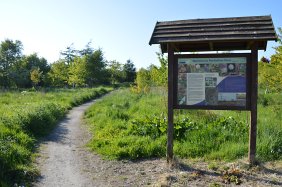 Waterlogged and acidic peat makes life really tough on
a raised bog. Track down the wonderful wild bog plants
living on Portlethen Moss. We will uncover a few of
their survival secrets, encounter a carnivorous plant and
discover some natural dyes and pigments. Please wear
wellies for this wetland exploration. Booking essential.
MEET: at the Bruntland Road entrance to Portlethen
Moss, Portlethen
CONTACT: the Kincardine and Mearns Ranger on 07768
704671 kincardineandmearns.ranger@aberdeenshire.gov.uk
Are social media companies ‘failing young people’ on cyberbullying?
 Social media companies’ failure to tackle cyberbullying is putting the mental health of children and young people at risk, warns an inquiry from MPs and leading children’s charities.
Worryingly for parents, almost two thirds of (63%) of young people surveyed by the enquiry who had been cyberbullied said that they would not tell their parents if they experienced something upsetting online.
So, what can we do about it?
Cyberbullying takes many forms; persistent unwanted messaging, threats, sharing embarrassing photos. The report highlights the addictive nature of social media: one in ten (9%) young people surveyed admitted logging on after midnight every night and one young person said it was “almost like a drug”. Young people giving evidence to the inquiry described feeling judged and inadequate if they didn’t have enough likes or followers.
Young people who are the heaviest users of social media in all its forms are most likely to have low well-being and symptoms of anxiety and depression. Links between self-harm, suicide and cyberbullying have already been established by academics. Currently there are no rules requiring social media to protect young people from cyberbullying.
There are calls for social media companies and government to act, working together to resolve these issues. Parents have a role to play, raising awareness of online dangers and knowing what/who children are connecting with online. Perhaps most importantly knowing there are many ways of getting help to get the cyber bullying to stop. The following links can help;
respectme, support for Services
Childline telephone support for children and young people.
A National Approach to Anti-Bullying for Scotland’s Children and Young People
Parentline a national, confidential helpline providing advice for parents
Cyberbullying – Safe to Learn: Embedding anti-bullying work in schools.
Youth Loneliness
 You’re not supposed to feel lonely while you’re young, but the truth is it’s a bigger concern among young people than any other age group.
In recent years youth loneliness and isolation has been increasingly identified as a matter of significant public concern. Research identifies that one in three young people suffer from loneliness (Red Cross, Co-op, Kantar, 2016) and 65% of 16-25 years old reporting feeling loneliness at times and 32% feeling lonely “often” or “all the time” (Majoribanks and Bradley, 2017).
“Loneliness is a recognised problem among the elderly – there are day centres and charities to help them,” says Sam Challis, an information manager at the mental health charity Mind, “but when young people reach 21 they’re too old for youth services.”
But what can young people do to combat loneliness?
While meditation techniques such as mindfulness and apps such as Headspace are trendy solutions frequently recommended for a range of mental health problems, they’re not necessarily helpful for loneliness, as they actively encourage us to dwell alone on our thoughts. You’re be better off addressing the underlying causes of being lonely first – what’s stopping you going out and seeing people?
Social media can be helpful. Helplines can also reduce loneliness, at least in the short term. One in four men who call the Samaritans mention loneliness or isolation, and Get Connected is a free confidential helpline for young people, where they can seek help with emotional and mental health issues often linked to loneliness. There are also support services on websites such as Mind’s that can remind you you’re not alone. Speak to your employer, value the interactions you have in the workplace. Counselling can be helpful. The BACP website allows you to search for counsellors in your area. “A problem aired is a problem shared and sometimes you need to talk to someone impartial and independent of your friends and family.
If recent research is to be believed, loneliness is killing the elderly and, with an ageing population, we should aim to reduce our isolation before it is too late. “Getting older doesn’t have to mean getting lonelier,” says Ruth Sutherland, the chief executive of Relate, in a new report. “But much of this rests on laying the foundations to good-quality relationships earlier in life.”

Are you a Fearless Femme?
 A new grassroots movement to challenge sexism, reduce mental health stigma, and save the lives of young women across the world has kicked off in Scotland.
Young women are the highest-risk group for mental illness in the UK. Research estimates 46% of young women between 11 and 21 years old have sought out treatment for mental health conditions including anxiety, depression and eating disorders.
Research has shown that psychological distress amongst young women is linked to the growing pressures that this group faces: pressures to look beautiful and thin in an age of ‘airbrushing’; social media pressures; stress at school and university; and an increase in sexual harassment. Very often, these pressures lead to low self-esteem and body image problems, with evidence suggesting that young girls start to worry about their body image from the age of 11.
Existing magazines targeting young women can compound these problems with picture perfect models gracing every page. Fearless Femme sets about challenging these cultural norms by empowering young women to overcome stress and other mental health challenges through its new online magazine and growing community of ‘rebelles’, as well as its research and campaigns for policy change.
Want to know more? Fearless Femme can be found at https://www.fearlessfemme.co.uk/our-story/
INTERNATIONAL DAY OF HAPPINESS
 A profound shift in attitudes is underway all over the world. People are now recognising that ‘progress’ should be about increasing human happiness and wellbeing, not just growing the economy.
March 20 has been established as the annual International Day of Happiness and all 193 United Nations member states have adopted a resolution calling for happiness to be given greater priority.
In 2011, the UN General Assembly adopted a resolution which recognised happiness as a “fundamental human goal” and called for “a more inclusive, equitable and balanced approach to economic growth that promotes the happiness and well-being of all peoples”.
In 2012 the first ever UN conference on Happiness took place and the UN General Assembly adopted a resolution which decreed that the International Day of Happiness would be observed every year on 20 March. It was celebrated for the first time in 2013.
 In 2017, the Smurfs joined the UN in celebrating the International Day of Happiness as well as the 17 Sustainable Development Goals – #SmallSmurfsBigGoals
The details of 2018 celebrations have not yet been announced, but whatever you have planned for the day, be happy!
How do you Communicate with your Community?
It is only 2 or 3 decades since communication was done by telephone, mail or face to face and all documents were stored in paper or hard copy files. Today the internet and associated devices such as computers, laptops, tablets, mobile devices, etc, are seen as a necessity rather than a luxury.
Since the baseline year of 2007, the percentage of adults using the internet for personal use in Scotland has increased from 62.7% to 83.4% in 2016. The use of the internet (for personal use) is however strongly linked to age. In 2016, 99.1% of 16-24 year olds used the internet for personal use, compared to 71.6% of 60-74 year olds and approximately a third of people aged 75 and older. Adults with a physical or mental health condition lasting or expected to last more than 12 months are less likely to use the internet for personal use. Almost seven out of ten adults with such a longstanding health condition use the internet for personal use, compared to nine out of ten among the rest of the population. (Source: Scottish Household Survey 2017)
 Within the UK of those without internet access, 64% felt they didn’t need the internet as it was regarded as not useful or interesting. A further 20% felt they lacked skills and 12% reported that they had access to the internet elsewhere. (Source:ONS: Internet access – households and individuals: 2017)
There are therefore sections of our population who either do not have or choose not to have digital access. Coupled with the fact that our use of technology is still evolving making it harder for sections of our communities to keep apace with the changes. For example, in social media Facebook, which only emerged 14 years ago is now being abandoned, by young people, for its little sister, Instagram. Reflecting the mobile engagement of the times. Figures from Nielsen Book Research UK survey of 2016 reveal that e-book sales are falling while sales of paper books are growing – and the shift is being driven by younger generations.
The advent of new technologies has changed how we interact, how we communicate and some of our reading habits. Within communities we need to inform and communicate with people both in digital and non-digital formats in order to reach all sectors. What do you find are the best means of communications with your communities? Share your ideas of what works. for you.
Have a healthy Christmas
 Christmas is a time of giving and receiving, spending time with friends and family and maybe overindulging just a little bit?
Here are our top tips to ensure you don’t start 2018 with that sinking feeling of too much Christmas pudding being the final straw;
- Don’t sit down all day – go for a walk, kick a football about, ride a new bike. Not only will this aid digestion, but help you sleep better too.
- Go easy on the booze
- Don’t give yourself a Christmas stuffing! Recent research suggests that we consume around 3,000 calories in our Christmas dinner – more than the entire recommended daily intake for a grown man!
- Keep colds at bay
- Don’t stress – ’tis the season to be jolly remember
- Eat fruit – even the clementine tucked in the bottom of your stocking will boost vitamin C warding coughs and colds.
- Do something for others – do you have an elderly neighbour who would love to share some festive spirit?
- Engage your brain – play games, do a crossword, not only does this keep your mind active but can be fun for the whole family

Don’t Try This At Home.
It’s never too late to rectify those ill-fated New Year’s Eve resolutions in which you swore to lead a healthier life. But if traditional spas leave you cold and meditation bores you, don’t worry, there are plenty of other options out there.
- Prison pampering, Thailand
While a visit to a Thai correctional institution may scream holiday hell rather than whisper wellness, in Chiang Mai a trip to prison is an unorthodox experience.
Inmates at the women’s correctional institution are given holistic training that will aid job prospects once released. They pamper visitors using the skill learned. It not only soothes aches and pains, but any tips earned are kept for prisoners on their release.
- Wine Spa Japan
At the end of a hard week, for many people one of the best ways to relax and unwind is with a glass or two of red wine.
But why not go one step further than drinking the stuff, and book a trip to the Yunesson Spa Resort in Japan?
It’s a self-described ‘spa theme park’ where you can legitimately bathe in hot tubs filled with Merlot or Bordeaux.
- Laughter Yoga
Invented by Indian doctor Madan Kataria in the mid-Nineties, laughter yoga now has thousands of devotees. Many sessions, are free for anybody to join, providing newcomers don’t mind an early start. Propelled by the philosophy that laughter gives humans huge spiritual and medical benefits, its main objective couldn’t be simpler – to set you’re giggling, howling, chortling and smirking instincts free.
- Buried Alive; a shamanic death & rebirth
With hopes of experiencing a closer connection with Mother Nature, pilgrims journey to the northwest coast of the US to take part in a shamen led burial ceremony.
Free spirited individuals are taken into the wilderness and covered fully with earth. After re-emerging individuals are said to feel a deeper connection and knowledge of spirit and creation.
http://thepracticalshaman.com/buried_alive/
- Cryotherapy, Slovakia
Nothing shouts health kick like freezing bits off in temperatures of -120c. Sportsmen and women have been using cryotheraphy to aid recovery for decades but now the public can don gloves, a face mask and step into a giant fridge.
Benefits are said to include the natural productions of enzymes and hormones as endorphins, adrenaline and testosterone are released. It’s the coolest wellness trend in town.
Mexico City’s bike revolution
It’s an eerily calm Sunday morning on the city’s Avenida Reforma, an avenue which is grid-locked on weekdays by tens of thousands of cars sitting bumper-to-bumper.
The Reforma’s closure to car traffic on Sundays in 2007 kickstarted the capital’s attempts to make life easier for cyclists. In 2010 a 17km-long bike lane through the city opened.
The car still reigns supreme in this metropolis of 22 million people, with more than four million vehicles clogging the roads every day.
 Perhaps the biggest factor has been the launch of the so-called Ecobicis (Eco-bikes) in 2010. Following on from similar schemes operating in London, Paris and Barcelona, Mexico City launched a public bike rentals at 90 different sites. Since then, some 30,000 people have joined and there is a waiting list for new members. The Ecobici system is expected to expand to 75,000 users by the end of 2012, with 4,000 more bicycles made available at new sites.
The scheme is not without it’s critics with some of Mexico City’s drivers spending up to four hours a day on their journeys to work, with three separate rush-hours. Some say cyclists have only made matters worse.
One local radio host Angel Verdugo angered bike users when he called on car drivers to run over the cyclists. He said championing the new breed of cyclists was a form of racism. “They want to be like Europeans,” he says. “They believe they are living in Paris and riding along the Champs-Elysees.”
He subsequently made a public apology.
There’s no doubt that Mexico City is for the most part still a car-orientated city but it is also clear that cycling is in the ascendancy. More cycle ways are planned, and public opinion supporting active travel is growing. A car free city is, however, a long way off.
Linking Generations
 Connections between generations are proven to enrich the lives of both young and seniors in long-lasting and meaningful ways.
When young people find ways to engage and develop relationships with the elderly, these experiences can build self-esteem, develop leadership skills, and encourage a lifelong commitment to volunteering.
For seniors, intergenerational connections provide the opportunity to transfer knowledge and wisdom, acknowledge self-worth, and feel they are contributing members of society.
In today’s world, many young people are experiencing less interaction with seniors because of homogenous neighborhoods, dispersed extended families, and increasing segregation of seniors living in care facilities or in isolation
Some of the benefits of intergenerational work include:
- Creation of age friendly communities.
- All generations have a lot to both teach and learn from each other and contribute to lifelong learning.
- Tackles issues around stereotyping and ageism.
- Increases understanding and respect between older people and younger people.
- Chance to make new friends and combats social isolation.
Healthy Mind, Healthy Body
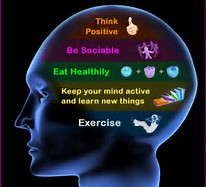 As you get older, keeping your mind active and healthy can become a big challenge. Your mental abilities generally decrease with age, particularly if your brain is not stimulated much. If your mind is not healthy and active in later life, you can have an increased chance of developing dementia (otherwise known as Alzheimer’s Disease). As well as age, your mental abilities can be affected by medical conditions and any medication that you are on to treat these.
A healthy mind can work wonders for improving your general health. Nutrition is believed to play a key role in keeping your mind healthy and active, and a good diet is essential for maintaining your general health. Recommended nutrition for an active mind includes fresh fruit and vegetables, salads, an adequate amount of carbohydrates and plenty of water (and fluids in general).
Some experts have suggested that several of the mental changes that were originally believed to be the result of getting older are actually caused by your lifestyle. This means that making the effort to keep your mind active and healthy through regular stimulation can have definite benefits for your mental abilities.
This can involve going back into education, taking home study courses, involving yourself in a new hobby or interest, doing stimulating puzzles (such as crosswords and Sudoku), playing games that require you to think (such as Scrabble or chess), reading books , exercising on a regular basis and using brain-training programs.
How to Improve and maintain your mental wellbeing
 K&M Communities