

 Ben Lazare Mijuskovic writes in Loneliness in Philosophy, Psychology, and Literature (2012) ‘man has always and everywhere suffered from feelings of acute loneliness’, however, it is important to recognise that loneliness means different things to different people. It is equally important to be cognizant of that fact that some people will feel lonely spending just a day alone, whilst others can go months with minimal social contact or communication and not experience any negative emotions. ‘Some may be socially isolated but content with minimal social contact or actually prefer to be alone’ writes Julianne Holt-Lunstad, the lead author of a 2015 report on loneliness in Perspectives on Psychological Science. ‘Others may have frequent social contact but still feel lonely.’ As the Age UK Loneliness and Isolation Evidence review also points out it is ‘possible to be isolated and not lonely, and to be lonely without being isolated’.
Had you been taking a stroll around downtown San Francisco in late September 2005 you might have noticed something unusual – an ordinary parking space turned into a tiny park featuring a tree, a patch of grass and a bench. This miniature patch of greenery was the brainchild of three urban designers and led to an unexpected global movement known as PARK(ing) Day. Held on the third Friday of September every year, PARK(ing) Day has seen thousands of otherwise grey spaces temporarily transformed, from a spot on London’s South Bank to a sidewalk in Alaska.
The PARK(ing) Day movement captured imaginations, but it’s not the only one of its kind. Pop-up parks (PUPs) are a growing phenomenon, one that a group of urban researchers from the Royal Melbourne Institute of Technology is taking seriously. They argue that PUPs (which they define simply as ‘temporary green spaces’) have the capacity to benefit both biodiversity and the people who live in cities. The group cites several studies that have demonstrated the importance of nature for human wellbeing, including a paper in the Annual of Public Health which concluded that: ‘Taken together, the research reviewed does indicate that contact with nature can promote health. The evidence for some benefits, such as short-term restorative effects, is already quite strong.’
 A’Beckett Urban Square PUP on the City Campus of RMIT University in Melbourne [Image: J Gollings]
‘There’s a lot of underutilised space in cities, and it’s going to be increasingly key to bring nature back into cities and have it close to offices,’ says Luis Mata, lead author of the study. ‘Some PUPs might only last for a couple of hours, whereas others last for years and may even become a path to something permanent. Depending on their deign and their spatial and temporal scales some will provide more benefits for people, some for biodiversity and some for both.’
The study points to a number of PUPs already in motion. In particular, San Francisco’s ‘Pavement to Parks’ program – an initiative that seeks to transform underutilised street spaces into public plazas known as ‘parklets’. It also refers to the UK’s Design Council and its ‘Knee High Design Challenge’ funding scheme which saw a PUP project trialled in Lambeth and Southwark. The transformed spaces were designed to encourage play and were filled with games for young children.
 “Grasslands” PUP at the State Library of Victoria in Melbourne [Image: M Stanton]
To address the lack of research into such spaces, the researchers want to see future sites become ‘socioecological laboratories’ in which urban planners conduct experiments to inform future design. Leading the way, Mata and his colleagues carried out their own analysis on a PUP in their home-town of Melbourne. They found that the six-week project called ‘Grasslands’, installed at the State Library of Victoria, saw insect pollinator abundance increase by around 160 per cent while the PUP was present.
The human impact of these spaces is harder to evaluate precisely. Nevertheless, the researchers contend that in dense urban environments with plenty of small, underutilised spaces, PUPs can help people spend time in nature, as well as foster community and in particular, creativity. ‘Creative thinking is sometimes lacking in academia,’ says Mata. ‘This new movement of people with artistic minds thinking of putting nature into cities is really excellent and is something that PUPs are uniquely placed to take advantage of.’

 In the Autumn of 2014, two San Francisco therapists shared a vision: to help heal that which divides us through the fine art of skilled listening. They gathered 26 of their colleagues, practiced listening skills and came up with a curriculum and model for listening on the sidewalks together.
 Connections between generations are proven to enrich the lives of both young and seniors in long-lasting and meaningful ways.
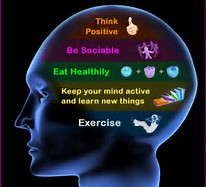 As you get older, keeping your mind active and healthy can become a big challenge. Your mental abilities generally decrease with age, particularly if your brain is not stimulated much. If your mind is not healthy and active in later life, you can have an increased chance of developing dementia (otherwise known as Alzheimer’s Disease). As well as age, your mental abilities can be affected by medical conditions and any medication that you are on to treat these.






 K&M Communities