
community
Kincardine and Mearns COVID-19 E-Bulletin Edition #11
This bulletin continues to focus on what is currently happening or in place locally as a result of the Covid-19 (Coronavirus) outbreak.

Hot Topics!
Local Development Plan Consultation
Aberdeenshire Council launched an eight week online consultation on it’s Proposed Local Development Plan 2020 (LDP) on Monday, May 25. The LDP Team have created a virtual ‘drop-in’ portal that has links to settlement posters, short films, live chat and the Proposed Plan. Please see the link to get involved.
Public Health Scotland Survey on Shielding
The Scottish Government has asked Public Health Scotland to evaluate the shielding programme. This survey is part of that evaluation. It will help inform about people’s experiences of shielding in Scotland and next steps. The survey takes 15 minutes to complete and will be open until Sunday June 14th 2020.
Enjoy watching K and M Community Response to the COVID19 Crisis Film June 2020.
Kincardine and Mearns COVID-19 E-Bulletin Edition #10
This bulletin continues to focus on what is currently happening or in place locally as a result of the Covid-19 (Coronavirus) outbreak.
This week we feature an article from Quarriers in K & M highlighting the vital support they are providing to young carers. Also some information on Carers Week and updated advice and resources.
To access the full bulletin, click here: https://mailchi.mp/0f782e68c00c/e-bulletin-4199806
Kincardine & Mearns E Bulletin #9
This bulletin continues to focus on what is currently happening or in place locally as a result of the Covid-19 (Coronavirus) outbreak.

The hot topic this week is the easing of lockdown restrictions, and read about the great work being done in Johnshaven and Benholm in their community larder. To access the full bulletin click here:
Virtual Wellbeing Festival 2020 in support of Mental Health Week: 18-24 May
Why kindness?
One thing that we have seen all over the world is that kindness is prevailing in uncertain times.
The added benefit of helping others is that it is good for our own mental health and wellbeing. It can help reduce stress and improve your emotional wellbeing
https://www.mentalhealth.org.uk/campaigns/mental-health-awareness-week
To help raise awareness that it is mental health week we encourage all those reading this to reflect on any acts of kindness whether receiving, giving or observing and use the Mental Health Foundation hash tags and post photo’s or a short post to let the country know what is happening in Aberdeenshire to promote mental wellbeing.
#KindnessMatters
#MentalHealthAwarenessWeek
Worthwhile causes in Kincardine and Mearns benefit from Community Resilience Fund
Here is a round-up of grants that have been given to worthwhile causes in Kincardine and Mearns thanks to the Aberdeenshire Community Resilience Fund.
 Aberdeenshire Council recently approved the creation of the support mechanism in light of the Coronavirus (Covid-19) pandemic.
In just a few weeks of the fund being available, there have already been a number of grants awarded to worthwhile community groups across Aberdeenshire.
Sophie Stephen felt guilty about buying the last pack of toilet roll. She posted on Facebook asking if anyone needed anything extra. This appeal quickly mushroomed into her creating community support group with 200 volunteers providing assistance in and around Portlethen.
She has split the area around Portlethen into 24 zones with each zone being overseen by zone leaders, who coordinate community helpers to provide support where it is needed. The group has put a leaflet through the door of every household advising residents of local contact numbers they can use if they need assistance.
The group is based at Jubilee Hall, where a foodbank is being manned from 9am to 5pm seven days-a-week. The group offers those requiring assistance help with collecting shopping and prescriptions as well as a telephone service to talk to residents. They are working with groups, councillors, the Scottish Ambulance Service among others. For more information please watch a video where Sophie shares her story: https://www.youtube.com/watch?v=NrNEAjjdYfw
In Johnshaven and Benholm, a team of local volunteers are available to deliver shopping, pick up prescriptions and walk dogs for those self-isolating or unable to venture outside for any reason.
A free community larder has also been set up offering food and essential supplies for anyone in need locally. The larder is available between 10am and 11am on Tuesdays and 7pm and 8pm on Thursdays at Johnshaven Village Hall in Mid Street, Johnshaven. For anyone that cannot come along to the larder deliveries of food can be arranged. Tinned and dry goods are being provided via the food initiative Fareshare and supplemented by generous donations from local people. A grant from Aberdeenshire Council’s Community Resilience Fund has meant fresh fruit, vegetables and eggs are also on offer and milk and bread are available on request. For more information or to request a delivery please email mairieddie@hotmail.com
Coronavirus has seen an increase in demand for the services provided to older people by Mearns Coastal Healthy Living Network. To meet this need, the network is spending its’ application on covering the costs of additional hours for staff and purchased mobile phones and contracts for staff and volunteers.
Elderly and vulnerable people living in and around Stonehaven have received hand sanitiser and toilet rolls thanks to Stonehaven and District Roundtable and A&I Taxi Company’s joint application. They have worked together on a mechanism to deliver prescriptions and medications.
Kincardine and Deeside Befriending facilitate a befriending service for older people living in their own homes in the community but are experiencing social isolation and loneliness, often due to frailty, ill health or bereavement. A grant will cover the costs of increased postage of cards and notes to clients, volunteers and stakeholders, as well as for volunteers to collect and distribute shopping.
Bruce Stewart, Kincardine and Mearns Area Manager, said: “I have been absolutely delighted with the response shown by the communities in Kincardine and Mearns to help those in need during the Coronavirus (Covid-19) pandemic.
“It is a pleasure to provide assistance to these fantastic individuals and worthwhile community organisations in ensuring the vulnerable and those in self isolation receive the assistance they require.”
Constituted community groups, resilience groups and volunteering organisations can submit a single application form to Bruce Stewart, Kincardine and Mearns Area Manager, with the implementation of the resilience fund following a similar approach to the existing Kincardine and Mearns Area Committee’s budget.
Each of the six areas in Aberdeenshire will have a £20,000 allocation, with the £80,000 balance being available to the whole of Aberdeenshire to be administered by the chair of the Community Resilience and Partnership Workstream.
Grants of up to £2,000 for community resilience work are available.As further community resilience funds become available from the Scottish Government, the value of grants and the criteria will be reviewed, however the principle aim at present is to be as flexible as possible for each individual community.
The Kincardine and Mearns Area Team, along with Community Learning and Development, Public Health and Aberdeenshire Voluntary Action the Rural Partnerships and other partners, will continue to work with community resilience groups and volunteers in their areas to provide support and identify any gaps in provision.
A coordinated approach is also being made with the Local Resilience Partnership and in particular with the British Red Cross, Aberdeen City Council and The Moray Council to ensure the maximum benefit, coverage and support is provided across the Grampian area. You can access the form here: https://www.aberdeenshire.gov.uk/communities-and-events/funding/community-resilience-covid-19/
Kincardine and Mearns COVID-19 E-Bulletin Edition #4
This bulletin continues to focus on what is currently happening or in place locally as a result of the Covid-19 (Coronavirus) outbreak.
This includes sections which will signpost you to official guidance, changes in service provision, local health and wellbeing providers, community resilience, support and advice.
*Please check each section for new and updated information*
|


Kincardine & Mearns Covid-19 E Bulletin
|
||||||||||||||||||||||||||||||||||||||||||||||||||||||||||||||||||||||||||||||||||||||||||||||||||||||||||||||||||||||||||||||||||||||||||||||
|


Third Sector Resilience Fund Launched
Applications are now open for the Third Sector Resilience Fund (TRSF).
Part of a £350m support package by the Scottish Government for the sector in response to the Coronavirus pandemic, the Third Sector Resilience Fund will support organisations across the third sector who are at risk of closure due to a sharp decrease in income or that are unable to deliver their services directly as a result of the Coronavirus pandemic. The fund’s primary intention is to help these organisations to stabilise and manage cash-flows over this difficult period.
The TSRF is delivered by Firstport, Social Investment Scotland and Corra Foundation and it offers charities, voluntary organisations and social enterprises grants of £5,000-£100,000. In addition, there will be up to a further £5m available in fully flexible, 0% interest loans starting at £50,000.
For more information and to apply, visit SCVO’s Coronavirus Third Sector Information Hub which has lots of useful information on funding for voluntary sector organisations during the coronavirus pandemic.
What is Loneliness and Social Isolation?
According to research by the University of York, ‘Loneliness is a subjective feeling associated with someone’s perception that their relationships with others are deficient’ whereas, ‘social isolation is a more objective measure of the absence of relationships, ties or contact with others’. In sum the latter can be a choice.
 Ben Lazare Mijuskovic writes in Loneliness in Philosophy, Psychology, and Literature (2012) ‘man has always and everywhere suffered from feelings of acute loneliness’, however, it is important to recognise that loneliness means different things to different people. It is equally important to be cognizant of that fact that some people will feel lonely spending just a day alone, whilst others can go months with minimal social contact or communication and not experience any negative emotions. ‘Some may be socially isolated but content with minimal social contact or actually prefer to be alone’ writes Julianne Holt-Lunstad, the lead author of a 2015 report on loneliness in Perspectives on Psychological Science. ‘Others may have frequent social contact but still feel lonely.’ As the Age UK Loneliness and Isolation Evidence review also points out it is ‘possible to be isolated and not lonely, and to be lonely without being isolated’.
This is the topic of research conducted by Kiren Zubairi, and led to the hosting of a conference on Loneliness and Social isolation hosted by the Kincardine And Mearns Welfare and Wellbeing network.
We were fortunate to have Kiren Zubairi author of the Zubairi Report on Loneliness and Social Isolation coming along to share her finding from the report. This qualitative study investigates the loneliness and social isolation experienced by under-represented demographics in Scotland, who often face multiple triggers including socio-economic disadvantage, poor access to transport and a lack of places and spaces that encourage connectedness and foster belonging.
The-Zubairi-Report-VHS-Nov-2018
Over the next few weeks this blog will aim to look at this topic; what are the causes, what are the effects of this, what can we do to address this issue, and what’s happening both locally and more widely to address this ever increasing issue.
Pop back next week to find out more!
Mapping the issues
 In many respects a community share issue is an old idea in 21st century wrapping – the idea of raising funds by public subscription has been around for years. Most war memorials, for instance, that were erected after the First World War were funded in this way. But community shares are more than a simple donation. They offer someone a chance to ‘invest’ in a local project and sometimes even make a little return on that investment. The number of share issues has been slowly growing and recently they have been mapped. Interesting to see the range and geographic spread.
To see a Map of Community Share Issues that has been compiled by Community Shares Scotland
Transient Visitor Levy – have your say
 The Scottish Government is considering introducing a Transient Visitor Levy. Also known as the Tourist Tax, this will create a discretionary power for local authorities to apply a tax or levy on overnight visitor stays.
Island co-ops stay strong
In this post digital age it’s difficult to lose any data thanks to the powerful algorithms that sit behind today’s search engines. But paper records are harder to track down and the history of social enterprise in Scotland becomes much more anecdotal the further back in time you travel. Some skilled work by the archivists at GCU is gradually piecing together the story of who did what, when, and where in order to lay the foundations for today’s social enterprises. Community cooperatives on Scotland’s islands were the early pioneers. In some ways, nothing much has changed.
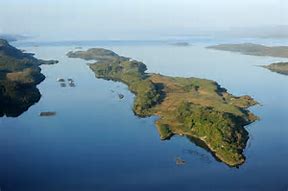 Scotland’s islands have the highest proportion of co-operatives of any part of the UK thanks to a long tradition of self-reliance, a survey has found.
The study by Co-operatives UK, the sector’s development body, said its survey of co-ops by local authority area found the Western Isles and Orkney topped the table with 8.16 and 5.91 co-ops respectively per 10,000 people. Shetland came in third, with 5.63. Eden in Cumbria came in joint fourth, with 4.55, followed by nearby Allerdale with 3.6.
The Scottish sector’s businesses are generally small, often community shops which provide the only stores in scarcely populated island communities. There are also credit unions, community energy companies and fishing co-ops.
The findings have been published as part of Co-operatives UK’s annual economic survey. It put its total turnover UK-wide at £37.7bn for 2018-19, a little over 1% higher than last year’s figure of £37.6bn and 2.75% higher than the £36.3bn in 2016-17.
The study confirmed that the John Lewis Partnership, the employee-owned group which includes Waitrose food stores, was the UK’s largest co-op with a turnover of £10.3bn; the Co-op itself narrowly behind on £10.2bn. Arla, the Denmark-based diary co-op, came third with a turnover of £2.6bn.
Excluding turnover, the data shows a slight decline in the sector’s size overall. The UK had 7,215 co-ops employing more than 233,000 people in the last financial year, compared with 7,226 employing nearly 235,000 a year earlier.
The report highlighted the Papay Community Co-operative, which runs the only shop and hostel on Papa Westray. The Orkney island has a resident population of about 85 people but is popular with island-hoppers on holiday. The business is close to Papa Westray’s airport, famous as a departure point for the world’s shortest scheduled service, a two-minute, 1.7-mile (2.8km) flight to nearby Westray.
Tim Dodman, the co-op’s secretary, said the business had an annual turnover of about £250,000 and employed four people, with some part-time help during busy periods. It also runs the school bus and local tours.
It was founded in 1980 after the only shop closed and no one could be found to run a new one single-handed. “The co-op ethos is very important,” Dodman said. “This is a small island and pretty remote. It’s much better to work cooperatively than have one individual in control of a lifeline service.”
By Sev Carrell, The Guardian
 K&M Communities