Latest Event Updates

Pissoirs and PB

Posted on Updated on

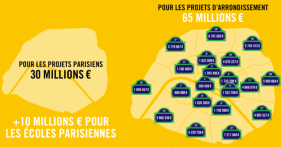
The phrase participatory budgeting (PB) is widely recognised but perhaps not fully understood – at least not in the way that it’s being practised elsewhere in the world. PB Scotland is hosting a major conference later this month at which some of the US and Canadian experience of PB will be shared. In many other countries, PB is completely normal and has been mainstreamed for years. For instance, Paris commits 5% of its capital spend (£89m) to a participatory process. That’s the equivalent of 45 euros for every citizen – no wonder Parisians engage in such numbers.

By The Guardian

Arnaud Carnet was crossing Paris on his bicycle one day when something strange caught his eye: a dilapidated old urinal stationed at the foot of the high walls of the last operational prison in the city.

This graffitied, ripe-smelling structure was far from a standard street pissoir. Carnet discovered that it was in fact the last remaining 19th-century vespasienne urinal in the city. He decided he needed to save it.

“It no longer conforms to the comfort standards of today,” he says of the urinal (an understatement). “But it’s a piece of heritage and it’s in a terrible state in the middle of the boulevard – it’s not possible to just leave it like that.”

In January, Carnet submitted a proposal to restore the vespasienne to Paris’s participatory budget scheme, which allows residents to vote on how they want the city to spend €100m (£89m) – 5% of its capital budget.

The urinal is “part of the great Parisian history of public sanitation,” he says, though he admits he’s never used it himself. “The participatory budget is an opportunity to give it a second youth.”

Carnet’s project was one of 430 that went to public vote between 6 September and 22 September this year. Sadly for him, the vespasienne was not one of the 11 major projects and 183 smaller propositions that earned enough votes to become reality. Instead, Parisians chose projects that ranged from better recycling facilities to upgraded cycling infrastructure to programmes to help women who are experiencing homelessness. Read the rest of this entry »

Mapping the issues

Posted on Updated on

In many respects a community share issue is an old idea in 21st century wrapping – the idea of raising funds by public subscription has been around for years. Most war memorials, for instance, that were erected after the First World War were funded in this way. But community shares are more than a simple donation. They offer someone a chance to ‘invest’ in a local project and sometimes even make a little return on that investment. The number of share issues has been slowly growing and recently they have been mapped. Interesting to see the range and geographic spread.
To see a Map of Community Share Issues that has been compiled by Community Shares Scotland


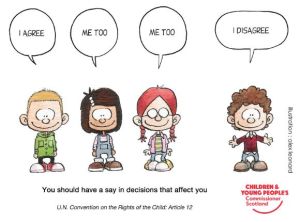
The United Nations Convention on the Rights of the Child (UNCRC) is turning 30 this November!

Posted on Updated on

The Children and Young People’s Commissioner Scotland (CYPCS) are encouraging us to celebrate rights by telling 7-word stories.


To celebrate CYPCS want everyone to talk about why children’s rights matter, in a way that means people of all ages can take part. So they’re asking you to send 7 word stories about the human rights of children and young people. #7WordStory #CRC30

Further information here.

Transient Visitor Levy – have your say

Posted on Updated on

The Scottish Government is considering introducing a Transient Visitor Levy. Also known as the Tourist Tax, this will create a discretionary power for local authorities to apply a tax or levy on overnight visitor stays.
Aberdeenshire Council is keen to gauge the views of the tourism industry about the suggested levy.  The results from this survey will be used to inform a Council report in November 2019, when Councillors will consider its view on a Transient Visitor Levy in Aberdeenshire.  Results from this survey will also inform the Aberdeenshire Council response to the current Scottish Government Consultation on The Principles of a Local Discretionary Transient Visitor Levy or Tourist Tax.

What impact would a Tourism Tax have on customer demand and what impact would the bureaucracy of collecting it have on your Aberdeenshire business?

Please submit your survey responses (which are anonymous) by 25 October 2019 – bit.ly/TVLfeedback

The Scottish Government is also holding two information sessions at North East Scotland College in Aberdeen on 16th & 17th October, open to everyone who has an interest in discussing what a Transient Visitor
Levy might look like. Visit: http://bit.ly/32WINfN

Island co-ops stay strong

Posted on Updated on

In this post digital age it’s difficult to lose any data thanks to the powerful algorithms that sit behind today’s search engines. But paper records are harder to track down and the history of social enterprise in Scotland becomes much more anecdotal the further back in time you travel. Some skilled work by the archivists at GCU is gradually piecing together the story of who did what, when, and where in order to lay the foundations for today’s social enterprises. Community cooperatives on Scotland’s islands were the early pioneers. In some ways, nothing much has changed.

Scotland’s islands have the highest proportion of co-operatives of any part of the UK thanks to a long tradition of self-reliance, a survey has found.

The study by Co-operatives UK, the sector’s development body, said its survey of co-ops by local authority area found the Western Isles and Orkney topped the table with 8.16 and 5.91 co-ops respectively per 10,000 people. Shetland came in third, with 5.63. Eden in Cumbria came in joint fourth, with 4.55, followed by nearby Allerdale with 3.6.

The Scottish sector’s businesses are generally small, often community shops which provide the only stores in scarcely populated island communities. There are also credit unions, community energy companies and fishing co-ops.

The findings have been published as part of Co-operatives UK’s annual economic survey. It put its total turnover UK-wide at £37.7bn for 2018-19, a little over 1% higher than last year’s figure of £37.6bn and 2.75% higher than the £36.3bn in 2016-17.

The study confirmed that the John Lewis Partnership, the employee-owned group which includes Waitrose food stores, was the UK’s largest co-op with a turnover of £10.3bn; the Co-op itself narrowly behind on £10.2bn. Arla, the Denmark-based diary co-op, came third with a turnover of £2.6bn.

Excluding turnover, the data shows a slight decline in the sector’s size overall. The UK had 7,215 co-ops employing more than 233,000 people in the last financial year, compared with 7,226 employing nearly 235,000 a year earlier.

The report highlighted the Papay Community Co-operative, which runs the only shop and hostel on Papa Westray. The Orkney island has a resident population of about 85 people but is popular with island-hoppers on holiday. The business is close to Papa Westray’s airport, famous as a departure point for the world’s shortest scheduled service, a two-minute, 1.7-mile (2.8km) flight to nearby Westray.

Tim Dodman, the co-op’s secretary, said the business had an annual turnover of about £250,000 and employed four people, with some part-time help during busy periods. It also runs the school bus and local tours.

It was founded in 1980 after the only shop closed and no one could be found to run a new one single-handed. “The co-op ethos is very important,” Dodman said. “This is a small island and pretty remote. It’s much better to work cooperatively than have one individual in control of a lifeline service.”

By Sev Carrell, The Guardian


Will you challenge poverty?

Posted on Updated on

The poverty that we see on our streets isn’t easy to reconcile with the knowledge that we are also one of the wealthiest countries in the world. Given the fact that every day we see people begging on the streets, queuing at foodbanks and experiencing homelessness, is there a risk we become inured to the extent of poverty? Each year, in an effort to shine a light on what’s happening on our streets, the Poverty Alliance coordinate a programme of activities during a week in October to Challenge Poverty.  Could your community help to challenge poverty?

Challenge Poverty Week has been coordinated by the Poverty Alliance for the last seven years, and it is an opportunity to highlight what is being done to address poverty, showcase the solutions we can all get behind to solve it, and commit to more action in the future. The Week takes place from the 7th to the 13th October 2019.

Last year nearly 200 actions were delivered by 130 organisations, elected representatives and individuals as part of Challenge Poverty Week.

Why not take part? Read the rest of this entry »

Across the Grain Festival returns this October

Posted on Updated on

Across The Grain is running for the second time throughout October, with an exciting and eclectic mix of activities, performances and workshops for all ages.

Events will be taking place in communities right across Aberdeenshire with most free to attend. Look out for printed programmes which give details of all performances and events.

Copies are available at libraries, leisure centres and museums, and key entertainment venues across the area. You’ll be sure to find a copy in your local shop, cafe or garden centre. The digital copy can be found on the Live LIfe Aberdeenshire website.

Organised by Live Life Aberdeenshire, last year’s inaugural festival got off to a really strong start, highlighting the uniqueness of the north east and attracting locals and visitors alike to around 50 events.

The desire to celebrate collectively what Aberdeenshire has to offer culturally has led to this year’s programme increasing significantly, showcasing the best the region has to offer, with some performances created especially for the festival.

These include a partnership with the Royal Conservatoire of Scotland which will see two leading dance experts hosting intergenerational workshops in the north, culminating in a celebratory performance to a live soundtrack mixing Scottish Trad with electronic music.

Other participatory events include creating a brand-new festival ‘sound picture’ using local words and phrases in Alford, led by renowned composer and sound artist Pete Stollery, and there is also a return of last year’s popular Doric Call My Bluff.

As well as numerous music and singing workshops, there are opportunities to hear authors and specialist speakers, and a range of fun challenges for all the family at Live Life Aberdeenshire museums and libraries. Read the rest of this entry »

The growth of the pop-up park

Posted on Updated on

A team of researchers in Australia are urging urban planners to embrace temporary green spaces

Had you been taking a stroll around downtown San Francisco in late September 2005 you might have noticed something unusual – an ordinary parking space turned into a tiny park featuring a tree, a patch of grass and a bench. This miniature patch of greenery was the brainchild of three urban designers and led to an unexpected global movement known as PARK(ing) Day. Held on the third Friday of September every year, PARK(ing) Day has seen thousands of otherwise grey spaces temporarily transformed, from a spot on London’s South Bank to a sidewalk in Alaska.

The PARK(ing) Day movement captured imaginations, but it’s not the only one of its kind. Pop-up parks (PUPs) are a growing phenomenon, one that a group of urban researchers from the Royal Melbourne Institute of Technology is taking seriously. They argue that PUPs (which they define simply as ‘temporary green spaces’) have the capacity to benefit both biodiversity and the people who live in cities. The group cites several studies that have demonstrated the importance of nature for human wellbeing, including a paper in the Annual of Public Health which concluded that: ‘Taken together, the research reviewed does indicate that contact with nature can promote health. The evidence for some benefits, such as short-term restorative effects, is already quite strong.’

A’Beckett Urban Square PUP on the City Campus of RMIT University in Melbourne, AustraliaA’Beckett Urban Square PUP on the City Campus of RMIT University in Melbourne [Image: J Gollings]

‘There’s a lot of underutilised space in cities, and it’s going to be increasingly key to bring nature back into cities and have it close to offices,’ says Luis Mata, lead author of the study. ‘Some PUPs might only last for a couple of hours, whereas others last for years and may even become a path to something permanent. Depending on their deign and their spatial and temporal scales some will provide more benefits for people, some for biodiversity and some for both.’

The study points to a number of PUPs already in motion. In particular, San Francisco’s ‘Pavement to Parks’ program – an initiative that seeks to transform underutilised street spaces into public plazas known as ‘parklets’. It also refers to the UK’s Design Council and its ‘Knee High Design Challenge’ funding scheme which saw a PUP project trialled in Lambeth and Southwark. The transformed spaces were designed to encourage play and were filled with games for young children.

the “Grasslands” PUP at the State Library of Victoria in Melbourne“Grasslands” PUP at the State Library of Victoria in Melbourne [Image: M Stanton]

To address the lack of research into such spaces, the researchers want to see future sites become ‘socioecological laboratories’ in which urban planners conduct experiments to inform future design. Leading the way, Mata and his colleagues carried out their own analysis on a PUP in their home-town of Melbourne. They found that the six-week project called ‘Grasslands’, installed at the State Library of Victoria, saw insect pollinator abundance increase by around 160 per cent while the PUP was present.

The human impact of these spaces is harder to evaluate precisely. Nevertheless, the researchers contend that in dense urban environments with plenty of small, underutilised spaces, PUPs can help people spend time in nature, as well as foster community and in particular, creativity. ‘Creative thinking is sometimes lacking in academia,’ says Mata. ‘This new movement of people with artistic minds thinking of putting nature into cities is really excellent and is something that PUPs are uniquely placed to take advantage of.’

Read the rest of this entry »

Grassic Gibbon Centre

Posted on Updated on

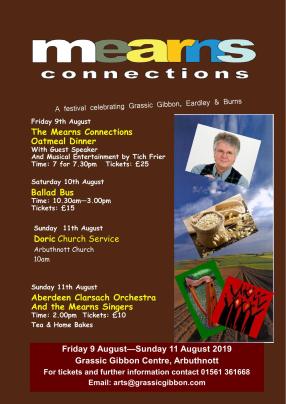
Please find attached the poster containing details of our fantastic events taking place at the Centre as part of the Mearns Connections Festival.

Tickets can be purchased by contacting the Centre on 01561 361668 or by e-mailing the Centre on arts@grassicgibbon.com or from the events section of our website www.grassicgibbon.com.

Growing up in Scotland: life at age 12

Posted on Updated on

This report presents some initial findings about the lives of 12-year-old children living in Scotland. It uses data collected from Birth Cohort 1 (BC1) of the Growing Up in Scotland study (GUS). GUS is an important longitudinal research project aimed at tracking the lives of Scottish children from birth, through their childhood, into adolescence and beyond. The study is funded by the Scottish Government and carried out by ScotCen Social Research.
BC1 is comprised of a nationally representative sample of 5217 children living in Scotland when they were 10 months old and who were born between June 2004 and May 2005. This report draws on data collected from 3419 families in 2017/18 when the children were aged 12 and most were in the second term of their first year at secondary school. Both data from interviews with parents and children themselves is used.

The report covers, in brief, several varied aspects of children’s lives including:

  • Experience of school and educational aspirations
  • Relationships with parents and peers
  • Social media and use of the internet
  • Involvement in risky behaviour
  • Healthy weight and perceptions of body weight
  • Life satisfaction

For each of these areas, the experiences of boys and girls are compared. Some comparisons are also made between children living in the most and least deprived areas in Scotland and also between children whose parents have different educational qualifications. Relationships between some of the types of experiences themselves are also explored. Only differences which were statistically significant at the 95% level are commented on in the text.

More information about the study is available on the Growing up in Scotland website.

Do you know what a LEZ is?

Posted on Updated on

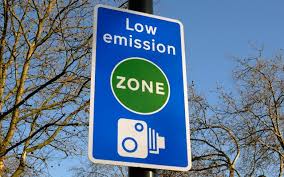
With the launch of London’s Ultra Low Emission Zone, we look at what is happening north of the border to improve air quality. Scotland’s local authorities are at the frontline of encouraging people out of their cars to walk, cycle or use public transport. One tool local government can use in the fight to reduce vehicle emissions – Low Emission Zones (LEZs). Glasgow’s LEZ for buses launched at the end of 2018. By 2022, it is expected that LEZs will be in full operation in Aberdeen, Glasgow, Dundee and Edinburgh. LEZs use financial penalty to encourage people and transport providers to switch to newer, less directly polluting vehicles. The challenge facing local authorities, however, remains how we encourage more people to leave the car at home for everyday journeys, particularly our towns and cities. LEZs are a tool tested across Europe to improve local air quality, but their efficacy in increasing active travel and improving air quality to a standard that improves health is unclear.

Background

The human and environmental cost of outdoor air pollution is stark, with annual deaths estimated to be between 28,000  and 40,000 in the UK. Illness and lost productivity linked to traffic emissions costs the UK economy an estimated £20 billion each year. In Scotland, 2,500 deaths and a shortened average lifespan of 3-4 months are consequences of the air we breathe. Those consequences disproportionately affect children, older people and people with respiratory and cardiovascular illness. Poor air quality has a greater effect on people living on lower incomes. They are more likely to live in high traffic areas, own fewer cars yet experience the worst effects of traffic and air pollution.

What are low emission zones?

Sweden introduced the first LEZ in 1996 and there are now over 200 LEZs operating in 15 countries. LEZs set a minimum emission standard for vehicles entering a defined area. Only diesel vehicles manufactured from 2015 and petrol cars manufactured from 2006 are likely to meet the standards in the UK. The standards are based on Euro emission engine classifications. The use of Euro standards is unlikely to be affected by Brexit as manufacturers will still make vehicles to the same standards.

The DVLA are developing a database for the public to check their vehicle. In the interim, Transport for London have launched a checker. Charges or fines are imposed on non-compliant vehicles entering a LEZ. The types of vehicles affected vary around Europe, but the focus is usually on heavier vehicles, diesel lorries and buses. Methods of enforcement range from ANPR cameras to coloured vehicle stickers monitored by local police. In Hamburg, two streets are heavily restricted with only diesel cars and lorries meeting the Euro 6 standard able to enter. Few existing European LEZs, however, affect private cars. London’s new Ultra Low Emission Zone is an exception rather than the current rule. In Scotland, the government has committed to LEZs affecting both petrol and diesel cars.

LEZs are not implemented in isolation, they are part of wider air quality action plans that seek to reduce emissions from many sources, including industry and homes. Of note is that although many LEZs in Europe were introduced with little public consultation but public compliance and support is generally high. Read the rest of this entry »

Green Infrastructure

Posted on Updated on

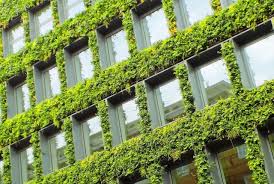
Home to over half of the planet’s population, urban areas are responsible for a significant proportion of global greenhouse gas emissions.

What is green infrastructure and why is it important?

Green infrastructure is defined as a “planned network of natural and semi-natural areas with other environmental features designed and managed to deliver a wide range of ecosystem services”. This term incorporates a huge variety of different ecosystems from parks, playing fields and woodlands to community gardens, green roofs and street planters. These spaces facilitate physical activity, relaxation and can be a refuge from the noisy city. Green spaces help to foster biodiversity and provide safe routes for people walking and cycling through the city thus contributing positively to population health. In fact, estimates show that physical inactivity, linked to poor walkability and lack of access to recreational areas, accounts for 3.3% of global deaths.

There is robust evidence to support the claim that green space has a positive impact on people’s wellbeing with features such as parks, rivers and trees creating more liveable and pleasing urban environments. Research has shown that having access to green space can reduce health inequalities, improve well-being and aid in the treatment of mental illness.

Importantly, green spaces also help to regulate the impacts of harmful emissions in the city. Trees absorb carbon dioxide and help to filter out harmful pollution while urban waterways such as lakes, rivers or even fountains moderate temperature and together with vegetation, play a vital role in cooling cities. In some areas, it has been estimated that evapotranspiration (the process of converting water in leaves to water vapor which is then transpired through the trees) can reduce peak summer temperatures by 5°C. Additionally, green spaces provide areas where runoff interception can occur, thus reducing the likelihood of flooding, an issue particularly pertinent to Scotland where winter rainfall is expected to increase between 10-35% in some areas.

Supporting the development of green infrastructure is becoming an even more prominent part of urban policymaking across the world. From street planters to citizen gardening, the following section describes a couple of examples  in which local authorities in Scotland are helping to create healthier, greener cities. Read the rest of this entry »