
Local Blog
U3A (The University of the Third Age)
…is a UK-wide movement which brings together people in their ‘third age’ to develop their interests and continue their learning in a friendly and informal environment.
If you’re wondering what we mean by the third age – it is a time after you have finished working full-time or raising your family and have time to pursue your interests or just try something new.
As you get older, keeping your mind active and healthy can become a big challenge, but it’s well documented that keeping your mind active has a direct impact on physical health too.U3A has a ‘university’ of members who draw upon their knowledge and experience to teach and learn from each other but there are no qualifications to pass – it is just for pleasure. Learning is its own reward.
It’s all voluntary; a typical U3A will be home to many activity groups covering hundreds of different subjects – from art to zoology and everything in between.
Formed over 30 years ago, there are now over 1,000 U3As across the UK, with thousands of interest groups between them and more than 400,000 members nationally – plus it’s growing every day.
Want to join, click here https://www.u3a.org.uk/find
“We never had so much need of storytelling and its healing powers.” George Mackay Brown
Storytelling activities provide opportunities for the socially and educationally excluded to take part in cultural experiences that provide a platform for a sense of community, inclusion, and understanding. We all have a story to tell, and storytelling can provide a valuable means of self-expression and communication, as well as building confidence and self-esteem and combating feelings of loneliness and isolation.
Handmade Tales
Handmade Tales was an eight-week project that offered carers and those experiencing mental health problems some ‘time out’ in the form of storytelling sessions. Facilitated by storyteller Claire Hewitt, these Handmade Tales sessions gave the carers the opportunity to socialise with people going through similar experiences, have some much needed ‘me time’ and find a voice to tell their own stories. This helped them to reconnect and rebuild stronger relationships with family and friends – especially with the person the care for.
 Claire led participants through a programme of storytelling and arts and craft activities all linked to the theme of spring. Whilst the hands were busy felting, stitching, thumping clay or making bread, stories were shared. Storytelling and the accompanying handwork gave participants the skills to express who they are, help them reconnect with forgotten dreams and celebrate life and the growth of something new. These sessions gave the carers the opportunity just to have a break away from their caring role, and act as a reminder that they too are important and they need to look after themselves.
This project was in collaboration with Support in Mind Scotland and the Scottish Storytelling Centre and supported by the Scottish Government ‘Short Breaks Fund.
What does “wellbeing” mean to you?
Welcome to the second of Kincardine and Mearns local community plan priorities.
Communities, both place-based and people sharing a common identity or affinity, have a vital contribution to make to health and wellbeing. Community life, social connections, supportive relationships and having a voice in local decisions are all factors that underpin good health, however, inequalities persist and too many people experience the effects of social exclusion or lack social support. Participatory approaches directly address the marginalisation and powerlessness caused by entrenched health inequalities.

The assets within communities, such as the skills and knowledge, social networks, local groups and community organisations, are building blocks for good health. Many people in Kincardine & Mearns already contribute to community life through volunteering, community leadership and activism. Community empowerment occurs when people work together to shape the decisions that influence their lives and health and begin to create a more equitable society. This is not about a DIY approach to health; there are important roles for NHS, local government and their partners in creating safe and supportive places, fostering resilience and enabling individuals and communities to take more control of their health and lives.
Over the next few weeks we will share with you some stories about wellbeing and what it means to a variety of people. Look out for our first blog next week.We hope you enjoy
A Nation of Cyclists
The famous Dutch obsession with bicycles is clearly paying off – a recent study has shown.
While there have been a plethora of studies demonstrating the health benefits of cycling as a means to reduce the risk of sedentary lifestyle diseases and all-cause mortality, the study “Dutch Cycling: Quantifying the Health and Related Economic Benefits” – is the first to actually quantify the health benefits and related economic benefits at a population level in the Netherlands. Currently, about 27% of all trips in the Netherlands are made by bicycle and the weekly time spent cycling is about 74 minutes per week for Dutch adults of 20 to 90 years of age. Even more noteworthy and remarkable, over half of the total life expectancy increase calculated in this study is being achieved by cycling among adults aged 65 and older.
The study clearly shows that Dutch investments in bicycle-promoting policies, such as improved bicycle infrastructure and facilities, are likely to yield a high cost-benefit ratio in the long term. Health benefits translate into economic benefits of over 5% of Dutch GDP. To calculate the economic health benefits of cycling, HEAT (Health Economic Assessment Tool) uses a standard value of a statistical life (VSL) to monetize the number of deaths per year prevented by cycling. With a Dutch VSL of € 2.8 million per prevented death, investment in cycling is an extremely wise economic investment. The €0.5 billion per year spent by the Dutch government on road and parking infrastructure for cycling is estimated to yield total economic health benefits of € 19 billion per year!
 Investments in high quality cycling policies and infrastructure produce great benefit over the long term. Cycling for transport delivers wealth and health, quality of life, for people and for cities.
North Kincardine Treasure Map
Newtonhill, Muchalls & Cammachmore Community Council have been busy developing the North Kincardine Treasure map. 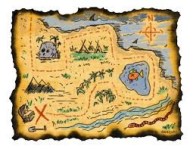
Its aim to encourage people to explore North Kincardineshire supports the work we have been doing to enhance and increase activity in the local area. A copy of the map has been delivered to all dwellings in Council Ward 17, highlighting five key trails with points of interest along the way. An interactive website provides additional information and routes and will develop into a valuable archive of the area.
The ‘Treasure Map’ project was linked to an Integrated Travel Town Project and a Community Sports Hub (CSH) ‘healthy weight project’. It encourages local residents to get out and about and tells them more about their local area. This is community and Council working together to create something special for the whole community!”
Want to know more? Visit http://www.discovernorthkincardine.org.uk/index.html
Forget the gym…..
Middle-aged people are being urged to walk faster to help stay healthy, amid concern high levels of inactivity may be harming their health.
They are urging those between the ages of 40 and 60 to start doing regular brisk walks.
 Just 10 minutes a day could have a major impact, reducing the risk of early death by 15%, they say.
But estimates show four out of every 10 40- to 60-year-olds do not even manage a brisk 10-minute walk each month.
An American study found that people who walked for at least four hours a week gained less weight (an average 9 lb less) than couch potatoes as they got older.
Last year, researchers at the University of Colorado found that regular walking helped to prevent peripheral artery disease (which impairs blood flow in the legs and causes leg pain in one-fifth of elderly people).
Walking can even prevent colds. Researchers at the University of Massachusetts medical school found that people who walked every day had 25 per cent fewer colds than those who were sedentary.
Because walking is a weight-bearing exercise, it can also help prevent the bone
 disease osteoporosis.
Best of all, walking makes you feel good about yourself. “For people suffering from depression, walking three to four times a week for 30 minutes has been shown to enhance their mood
So next time you have 20 minutes to spare, put on your shoes and start your journey to better health.
Be Active
If you were told by a Dr – take this magic pill daily and you will reduce numerous health risks, be fit and healthy……would you take it? Unfortunately the wonder pill doesn’t exist, however in its place we are going to prescribe everyone regular physical activity/exercise and put you on the path to the same results. A little motivation can go a long way.
Walking: the most accessible and easiest way for most to incorporate exercise into our lifestyles. It’s free, gentle &low-impact that requires no special training or equipment. Almost everyone can do it, anywhere and at any time. You could join a health walk, become a rambler or just walk to the shops. Check out the Aberdeenshire Council Ranger Service to find out about the rich natural heritage surrounding us.
If walking isn’t your thing, how about cycling? You could go for the standard cycle or try out an electric bike. Electric bikes (e-bikes) work much the same as ordinary bicycles except they have an electric motor which works when you pedal to give a bit of a boost, making going uphill a lot easier! You don’t need a special license to ride one (as long as you are over the age of 14) and the bikes can be used on cycle paths the same as ordinary bicycles.
Talking of cycle paths, Aberdeenshire Council transport strategy team have just finished new local ‘Walking & Cycling maps’ for several Aberdeenshire towns which are to be launched soon. We are also hearing whispers of ‘Treasure Trails’ which sounds interesting, and as far as we are concerned – anything that encourages us to get out and about is a winner in our eyes. Want to know more? Visit http://getabout.org.uk/ for more information.
Tell us what would make you more active in your community. Is there a path near you which could be a great walking route, perhaps you would like to be able to commute to work by bike? We’d love to hear from you at kandmcommunities@gmail.com
The Good Life
Twenty-seven percent of children and 61% of adults in Scotland do not meet recommended levels of physical activity. Physical inactivity is known to increase the risk of developing a number of conditions including obesity, diabetes, heart disease and bowel cancer. Walking and cycling for everyday short journeys is the easiest and cheapest way of building more physical activity into busy lives. It helps to protect against physical ill health and helps to maintain good mental health.
Evidence from engagement highlighted the importance within Kincardine & Mearns that communities have the possibility to travel actively, with walking or cycling the most popular choice for shorter everyday journeys. This is why we chose to focus on active travel routes in Kincardine & Mearns, ensuring cycle and footpaths are developed and improved.
Over the next few weeks we will share with you some of the work that is taking place and how we can learn from what others are doing to make life better for all of us.
All Change!
“A true community is not just about being geographically close to someone or part of the same social web network. It’s about feeling connected and responsible for what happens.”
In a change from our previous blogs K & M Communities is going to focus on the topics you have told us are you important to you, the priorities in our Local Community Plan. They are;
- Strong Communities
- Connecting People
- Wellbeing
Over the next few weeks and months we will share with you some information and thoughts on these priorities, what’s happening in your local community and how you can have a voice in deciding what’s important in the future. We’re starting off with Connecting People. We hope you enjoy!

Cornerstone
 Cornerstone, an award winning and pioneering Scottish charity is looking to recruit new Board members to be part of our transformational and pioneering journey to transform social care in Scotland. www.cornerstone.org.uk
What we are looking for:
Essential:
People with the passion to make a difference
Pioneering individuals who want Cornerstone to thrive
People with an understanding of what it means to be a Director of a company – both the responsibility and the privilege
Desirable:
We are particularly looking for people who have public sector experience in commissioning, health or social care policy and/or the planning and influencing of change in social work practice .
We would love to hear from people based in areas out with Aberdeen
As we are an organisation that embraces diversity we would love to hear from you if you are female, a person with a disability or someone from any other minority group
We are also interested in people who have experience of being cared for or supported by Cornerstone either the person themselves or a family member
If you would like to find out more please contact Edel Harris CEO or Peter Nicholson Chair of the Board on edel.harris@cornerstone.org.uk or 01224 256001
Image Posted on Updated on

 K&M Communities