
healthy lifestyles
Green Infrastructure
Home to over half of the planet’s population, urban areas are responsible for a significant proportion of global greenhouse gas emissions. 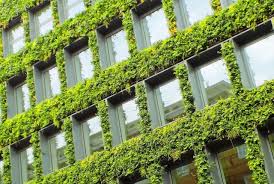
What is green infrastructure and why is it important?
Green infrastructure is defined as a “planned network of natural and semi-natural areas with other environmental features designed and managed to deliver a wide range of ecosystem services”. This term incorporates a huge variety of different ecosystems from parks, playing fields and woodlands to community gardens, green roofs and street planters. These spaces facilitate physical activity, relaxation and can be a refuge from the noisy city. Green spaces help to foster biodiversity and provide safe routes for people walking and cycling through the city thus contributing positively to population health. In fact, estimates show that physical inactivity, linked to poor walkability and lack of access to recreational areas, accounts for 3.3% of global deaths.
There is robust evidence to support the claim that green space has a positive impact on people’s wellbeing with features such as parks, rivers and trees creating more liveable and pleasing urban environments. Research has shown that having access to green space can reduce health inequalities, improve well-being and aid in the treatment of mental illness.
Importantly, green spaces also help to regulate the impacts of harmful emissions in the city. Trees absorb carbon dioxide and help to filter out harmful pollution while urban waterways such as lakes, rivers or even fountains moderate temperature and together with vegetation, play a vital role in cooling cities. In some areas, it has been estimated that evapotranspiration (the process of converting water in leaves to water vapor which is then transpired through the trees) can reduce peak summer temperatures by 5°C. Additionally, green spaces provide areas where runoff interception can occur, thus reducing the likelihood of flooding, an issue particularly pertinent to Scotland where winter rainfall is expected to increase between 10-35% in some areas.
Supporting the development of green infrastructure is becoming an even more prominent part of urban policymaking across the world. From street planters to citizen gardening, the following section describes a couple of examples in which local authorities in Scotland are helping to create healthier, greener cities. Read the rest of this entry »
The importance of dignity
 Preserving dignity looks like it is being built into the design Scotland’s new social security system. It’s also the phrase that was at the heart of work undertaken by the Poverty Truth Commission and Nourish Scotland on the community provision of food. Consideration of how something might impact on a person’s dignity, could really transform the way we think about the delivery of public services. Here’s a great example of a community project in Aberdeen which tackles food poverty but always with a keen eye on preserving the dignity of those they serve.
A basket full of high-quality food for £2.50 may seem too good to be true – but that’s now the reality for shoppers at Scotland’s first food pantry.
The Woodside Pantry in Aberdeen provides people living in one of the city’s most disadvantaged areas a way to shop for a lot less.
It is an innovative, community-run project. The aim is to combat food poverty, and it has been hailed as a sustainable alternative to food bank use.
“I can get some really good healthy food at a very reasonable price”
For a small weekly charge, members get access to food donated by supermarkets and a local charity. Clare Whyte, one of the workers at the community centre where the pantry is based, told BBC Scotland’s The Nine: “Food banks are not a long-term solution. It’s an emergency food service, really.
“This could be a way to reduce food waste which is massive and a huge issue as we know and also tackle food poverty at the same time.
Food parcels from food banks are often only available to people who have been referred by frontline professionals like GPs or advice agencies. But membership of the Woodside Pantry was initially open to anyone living in the immediate area around the Fersands and Fountain Community Centre, where the project is based. It proved so popular that the catchment area has now been widened and the membership cap extended. Almost half of the people using the service receive benefits or Jobseeker’s Allowance. A quarter of the users are single parents. There are now 83 households with membership to the pantry, and more than 200 local residents – including children – are directly benefitting.
“I can get some very good, healthy food at a very reasonable price,” said Margaret Aisbitt, who was one of the first to sign up. Read the rest of this entry »
How have you experienced Dementia support across Aberdeenshire?
 Have you or someone you know been diagnosed with Dementia? Do you support someone who is currently living with Dementia? If so then we need to hear from you!
The Aberdeenshire Health & Social Care Partnership (AHSCP) is currently in the early stages of developing an Aberdeenshire wide Dementia Strategy and is looking to hear from people affected by Dementia.
To support people with lived experience to tell us about their Dementia journey, we have developed a series of ‘Village Storytelling’ events. Developed in partnership with The Village Storytelling Centre and delivered by colleagues across the health and social care partnership and third sector, sessions will allow those taking part tell their story in a safe and supported environment.
Chair of the Integration Joint Board (IJB) Rhona Atkinson, said, “This strategy will set out how the Partnership supports those living with Dementia and their families over the next 5 years. It is such an important area for us, so it is vital that we understand what support people need, when they need it, what is working well and not so well, now.
“The team working on the strategy have set out a great way to support those who are already living with dementia to participate through the Storytelling sessions and I would urge anyone who is able to come along and join in”
Vice Chair of the IJB, Cllr Anne Stirling, said, “We need to hear from everyone, people with a diagnosis, Unpaid Carers, Volunteers, Third Sector Organisations, family members, professionals; everyone! Whether you do this through the storytelling sessions or through the online survey the team will support you to participate in a way that works for you”
Public events;
Dementia Storytelling session (Peterhead) – 3rd July 2019, tickets can be booked via – https://www.eventbrite.co.uk/e/dementia-storytelling-session-peterhead-tickets-63109065915
Dementia Storytelling session (Inverurie) – 4th July 2019, – https://www.eventbrite.co.uk/e/dementia-storytelling-session-inverurie-tickets-63107832225
Dementia Storytelling session (Stonehaven) – https://www.eventbrite.co.uk/e/dementia-storytelling-session-stonehaven-tickets-63109373836
In addition to the public events any groups or care settings who would wish to hold their own storytelling session are invited to request one via integration@aberdeenshire.gov.uk
Online survey;
https://aberdeenshirehscp.limequery.org/489997?lang=en
The feedback gathered from the ‘Village Storytelling’ sessions and the survey will be used to develop and inform a draft strategy which will be widely consulted on prior to being finally agreed by the IJB.
DON’T MISS YOUR CHANCE TO HAVE YOUR SAY!
Grampian System Wide Mental Health and Learning Disability Services Review
 I would like to invite you to participate in the Grampian Mental Health and Learning Disability Service Review. NHS Grampian, together with Aberdeen City, Aberdeenshire and Moray Health & Social Care Partnerships (HSCPs) are reviewing the sustainability of the provision of local and Grampian wide Mental Health and Learning Disability (MHLD) services, building on local engagement in a number of areas. This includes services for children and adolescents (CAMHS), adults and older people spanning self-management, GP and primary care services, community services and specialist inpatient care.
The Health and Social Care Alliance Scotland (the ALLIANCE) has been asked to help support the review by facilitating a series of consultation events across Grampian throughout April/May 2019 where you will be given the opportunity to hear from NHS Grampian planners and give your views on what’s working, what could be improved and where there are service gaps.
There will be events taking place at various times and in different locations below. To reserve your place at an event, please follow the Eventbrite link and book the session that’s best for you.
- Aberdeen City on Monday 29 April 2019 – Jurys Inn, Union Square AB11 5RG – 12.00 pm to 2.30 pm BOOK NOW
- Aberdeen City on Monday 29 April 2019 – Jurys Inn, Union Square AB11 5RG – 5.30 pm to 7.30 pm BOOK NOW
- Inverurie on Tuesday 30 April 2019 – Fly Cup, Blackhall Industrial Estate AB51 4FS – 12.00 pm to 2.30 pm BOOK NOW
- Fraserburgh on Tuesday 30 April 2019 – Fraserburgh Community and Sports Centre, Maconochie Place AB43 9TH – 1 pm to 3.30 pm BOOK NOW
- Stonehaven on Tuesday 30 April 2019 – Stonehaven Community Centre, Bath Street, Stonehaven, AB39 2DH 6.00 pm to 8.00 pm BOOK NOW
- Elgin on Wednesday 1 May 2019 – The Mansfield Hotel, 2 Mayne Road IV30 1NY – 12.00 pm to 2.30 pm BOOK NOW
We want to ensure we capture the views of as many people as possible, therefore we would be delighted for you to share this invitation amongst your own contacts and networks as the events are open to all.
In addition, the ALLIANCE can provide a facilitation pack if you would like to host your own event to capture views. For any questions or queries please get in touch by emailing comms.coordinator@alliance-scotland.org.uk or phoning Gerry Power, Director at the ALLIANCE on 0141 404 0231.
Are you planning to walk further in 2019….?
Hands up if you made a New Year resolution to get fitter, or meet new people in 2019?
Most of us reflect at this time of year and these are certainly achievable and popular resolutions. Walking with friends is an easy and accessible opportunity. Good news is that there is a growing network of walking groups for all abilities across Kincardine and Mearns.
The following are useful organisations and contacts;
1 Paths for All
Paths for All’s vision is for a happier, healthier Scotland where physical activity improves quality of life and wellbeing for all. Read the rest of this entry »
New Website to provide support to anyone affected by alcohol and drugs in Aberdeenshire www.aberdeenshirealcoholdrugs.support

Aberdeenshire Alcohol and Drug Partnership (ADP) have a new website to help support anyone affected by alcohol and drugs in Aberdeenshire. The online resource www.aberdeenshirealcoholdrugs.support aims to provide information and signposting to a range of support services and organisations across Aberdeenshire and nationally.
The website was developed in response to feedback that there was a lack of information in an easily accessible format on what drug and alcohol support was available and how to access help when it was needed. The ADP have worked with service users, family members and people in recovery to make sure that the information on the website is useful, easy to understand and access.
The resource aims to help people using any drug including alcohol, whether worried about their own drug or alcohol use, a friend’s use or family member’s use. www.aberdeenshirealcoholdrugs.support provides a one-stop shop for information on support, treatment and recovery. Within each section, people can find out more about a particular area of support and advice and then clearly see which organisations provide this support and their contact details.
The Aberdeenshire Alcohol Drugs Support website will always have the most up to date information on the Substance Use Service Gateway in Aberdeenshire. . The Gateway is part of the NHS and Council Substance Use Service team and provides confidential, non-judgmental assistance towards the right treatment, support or information. The GET HELP button either the Alcohol or Drugs section of the website displays phone and email details as well as arrangements for drop in facilities around Aberdeenshire.
Professionals and agencies can help any of their clients to engage with the Alcohol or Drug Use Service by calling 01224 558844 or email to nhsg.kessockclinic@nhs.net (North Aberdeenshire) nhsg.grampianscspa@nhs.net (South and Central Aberdeenshire)
Sci-Gateway and Track Care can also still be used for referrals from NHS.
Print materials, posters and cards, promoting the website and access to the Aberdeenshire Alcohol and Drug Service will be delivered to agencies soon. The ADP would be grateful if these could be displayed widely and offered to people who might need help with their alcohol or drug use in Aberdeenshire. To get a supply or resupply contact aberdeenshire.adp@nhs.net
The ADP have identified a wide range of information that they think is useful to people and communities however they welcome approaches from services, groups, community members with information to add or changes to make. Please use the website to share your own news. Send news items and suggested changes to the adp email above. 
Adventurous Enterprise
Tourism has long been a cornerstone of the Scottish economy – generating £6bn in the last year. This year’s good weather and low pound are projected to boost that even further. One of the fastest growing sectors in recent years across the industry worldwide has been adventure tourism, and with Scotland’s coastline, mountains and rivers it comes as no surprise that this growth is being mirrored here.
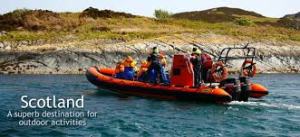 According to HIE’s Adventure Tourism in Scotland Research Report – there were at least 350 Adventure Tourism businesses operating in Scotland in 2015. More than a third of adventure tourism businesses were located in the Highland Council area, followed by 12% in Argyll and Bute and 8% in Perth and Kinross. 84% of businesses described themselves as activity and experience providers, with the remainder identifying as activity centres and attractions.
Cross sector collaboration initiatives can play an important role in developing the adventure tourism
market. Sectors such as retail and transport benefit from the tourism industry through improved infrastructure, increased footfall and repeat custom, while accommodation providers can work in tandem with adventure tourism organisations in the area to create a better-quality tourist offer to entice visitors to the area. Collaboration between social enterprise, private business and the public sector is key to increasing the quality of tourist offer available, however more could be done between social enterprise projects and with the wider tourism industry.
The Tourism Scotland 2020 strategy aims to grow Scotland’s visitor spend by £1bn in real terms, from
£4.5bn in 2011 to £5.5bn by 2020. To achieve this, the strategy has identified three key growth markets to make up the backbone of tourism revenue by 2020;
- Home turf:
£3,127m in 2011
Potential £3,586m–£4,238m in 2020
England, Scotland, Northern Ireland, Wales. - Near neighbours:
£731m in 2011
Potential £875m–£1,035m in 2020
Scandinavia, Germany, France, Spain, Ireland,
Netherlands, Italy. - Distant cousins:
£414m in 2011
Potential £505m–£598m in 2020
USA, Australia, Canada.
Adventure tourism is identified as an area which offers “significant potential for growth” within the strategy. Collaboration between local businesses in rural destinations is key to developing a tourism offer which can engineer economic growth – local assets such as hill walking and cycling can be integrated with culture, local history, food and drink to create immersive tourism packages which better reflect the local area.
Want to find out more, have a look at the Senscot briefing, makes interesting reading; https://senscot.net/wp-content/uploads/2018/08/Adventure-Tourism-Briefing.pdf
A Ticking Timebomb?
 China was the Global Nutrition Report’s star performer. It was one of only two countries (the other being South Korea) that posted levels of stunting, women’s anaemia and overweight adults that were all below indications of a very serious public health risk.
China’s numbers are staggering. In the past 10 years GDP per capita has tripled, mortality rates for the under-fives have declined from 37 per 1,000 to 14, and the percentage of the under-fives who are short for their age has declined from 22% to 9%.
But how long will China remain the star performer?
Of great concern in the future are the rapid increases in overweight and obesity in China. While the rates of overweight adults in China are less than half the rates of the UK (and the rates of obesity are about a fifth of the UK’s), the rates for children less than 20 years of age are much closer.
It is this body-mass time bomb that is the most worrying aspect of China’s nutrition status. High body-mass is a risk factor for a range of diseases such as diabetes and some forms of heart disease.
Will we see UK–level rates of obesity in these adults in China in 15 years’ time?
But it is not too late. China has the opportunity and the means to show the rest of the world how to slow and reverse the apparent tsunami of obesity. It has the opportunity because the problem is not yet unmanageable and its economy is strong. This generates policy possibilities. It has the means, because of the strong ability of the state to shape the environment to make healthy choices easier and more likely.
And make no mistake about it – the world needs China to succeed. Obese people tend to consume more of the types of foods that have a higher carbon footprint such as meat, sugar and dairy. There are diets – vegetarian, Mediterranean and pescetarian for example – that are healthier for the planet and for humans. China needs to draw on traditional eating habits and move towards its own 21st century version of a healthier diet – we all have a stake in that.
The 100-Mile Diet.
Following our look at whether local food is “better,” read about a Canadian couple who experimented with this approach….
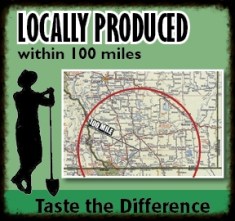 When Alisa Smith and James MacKinnon learned that the average ingredient in a North American meal travels 1,500 miles from farm to plate, they decided to launch a simple experiment to reconnect with the people and places that produced what they ate. For one year, they would only consume food that came from within a 100-mile radius of their Vancouver apartment. The 100-Mile Diet was born.
The concept of the 100-mile diet forces a mental shift from eating globally to think more locally to ensure everything you eat is within a 100 mile radius of your table. Though going cold turkey into eating within such a restricted geographical region may not be for everyone you can start with a single family meal. This forces you to research and explore what’s actually grown close to your home and you’ll begin to appreciate not only the bounty of your local region, but the major implications of eating foods from around the world.
Choosing to consume food that is produced within 100 miles of your home comes with all of the benefits of local, seasonal eating: more flavourful foods, smaller environmental footprint, better health, and support for local farmers.
Alisa and James admit that finding local food sources took a lot of time. Very little in a supermarket can be traced to where all the ingredients come from and many of the products contain oils, sugar or seasonings that have travelled vast distances. So they set about finding just who did produce food in the Vancouver area. Unsurprisingly, one of the biggest challenges was finding carbohydrates during the ‘hungry gap’ before the new season’s harvest began – rice, pasta and bread were all unavailable leaving only potatoes. Between them they lost 15 pounds in six weeks and were forced to loosen the rules slightly to include locally milled flour from grain that at least came from Canada. Summertime made life a little easier, with plentiful Farmer’s Markets a wealth of local foods. This did lead to its own problems though – many hours spent preserving foods for the long Canadian winter.
Is the 100 mile diet one that is realistic for your average person leading a busy life? No, but it was never intended to be. Alisa and James set themselves a high challenge to discover what the real issues with local food sourcing were. In the process they did much more, attracting a world-wide audience and making a bold political statement. This has led some people to label local food as the ‘new organic’ – something that seems to be at odds with the founder’s values which were very much attuned to sustainable organic food production. However, local food sourcing is deservedly gaining attention and the 100 mile diet certainly struck a chord with many who believe in sustainable production.
Is Local Always Better?
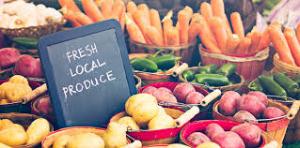 In 1993, a Swedish researcher calculated that the ingredients of a typical Swedish breakfast-apple, bread, butter, cheese, coffee, cream, orange juice, sugar-travelled a distance equal to the circumference of the Earth before reaching the Scandinavian table. In 2005, a researcher in Iowa found that the milk, sugar, and strawberries that go into a carton of strawberry yogurt collectively journeyed 2,211 miles just to get to the processing plant. As the local-food movement has come of age, this concept of “food miles” has come to dominate the discussion.
The concept offers a kind of convenient shorthand for describing a food system that’s centralized, industrialized, and complex almost to the point of absurdity. And, since our food is transported all those miles in ships, trains, trucks, and planes, attention to food miles also links up with broader concerns about the emissions of carbon dioxide and other greenhouse gases from fossil fuel-based transport.
So is eating local food better? And what exactly is “local food” in the first place? How local is local?
One problem with trying to determine whether local food is greener is that there’s no universally accepted definition of local food.
There’s some evidence that a popular understanding of local food is, at least in some places, coalescing around a 100-mile limit. A 2008 Leopold Institute survey of consumers throughout the United States found that two-thirds considered local food to mean food grown within 100 miles. Still, a variety of other definitions also persist. Sometimes local means food grown within a county, within a state or province, or even, in the case of some small European nations, within the country. All of those are perfectly valid ways of thinking about local. But they don’t have all that much to do with environmental costs and benefits.
In any case food miles don’t tell the whole story. “Food miles are a good measure of how far food has travelled. But they’re not a very good measure of the food’s environmental impact.”
That impact depends on how the food was transported, not just how far. For example, trains are 10 times more efficient at moving freight, ton for ton, than trucks are. So you could eat potatoes trucked in from 100 miles away, or potatoes shipped by rail from 1,000 miles away, and the greenhouse gas emissions associated with their transport from farm to table would be roughly the same.
The environmental impact of food also depends on how it is grown. Swedish researcher Annika Carlsson-Kanyama led a study that found it was better, from a greenhouse-gas perspective, for Swedes to buy Spanish tomatoes than Swedish tomatoes, because the Spanish tomatoes were grown in open fields while the local ones were grown in fossil-fuel-heated greenhouses.
However, what if water shortages require Spanish growers to install energy-intensive irrigation systems? And what if greenhouses in northern Europe were heated with renewable energy?
Perhaps it’s inevitable that consumers gravitate to a focus on food miles-the concept represents the last step before food arrives on our tables, the part of the agricultural supply chain that’s most visible to us. And indeed, all other things being equal, it’s better to purchase something grown locally than the same thing grown far away.
But a broader, more comprehensive picture of all the trade-offs in the food system requires tracking greenhouse gas emissions through all phases of a food’s production, transport, and consumption. And life-cycle analysis (LCA), a research method that provides precisely this “cradle-to-grave” perspective, reveals that food miles represent a relatively small slice of the greenhouse-gas pie.
The other clear result that emerges from these analyses is that what you eat matters at least as much as how far it travels, and agriculture’s overwhelming “hotspots” are red meat and dairy production. In part that’s due to the inefficiency of eating higher up on the food chain-it takes more energy, and generates more emissions, to grow grain, feed it to cows, and produce meat or dairy products for human consumption, than to feed grain to humans directly.
“Broadly speaking, eating fewer meat and dairy products and consuming more plant foods in their place is probably the single most helpful behavioural shift one can make” to reduce food-related greenhouse gas emissions.
Additionally, farmers who market locally are often relatively small in scale, and can more feasibly adopt environmentally beneficial practices such as growing a diversity of crops, planting cover crops, leaving weedy field borders or planting hedgerows that provide a refuge for native biodiversity, and integrating crop and livestock production. In short, the production practices matter a lot more than where the food was actually grown. If buying local also means buying with better production practices then that’s great, that’s going to make a huge difference.
So, is local food greener? Not necessarily. But look at the question from the opposite direction: if you’re a consumer interested in greener food, the local food economy is currently a good place to find it. By the same token, a farmer who sells in the local food economy might be more likely to adopt or continue sustainable practices in order to meet this customer demand.
Yet there are limits to this common-sense approach. In many areas, the climate is such that eating local, seasonal, field-grown produce would be a pretty bleak proposition for much of the year. Large concentrations of people live in areas not suited to growing certain staple crops; it’s one thing to forego bananas, but quite another to give up wheat. And population density itself works against relocalization of the food system. Most of the land within 100 miles of large cities such as New York is itself very built up; where will the farmland to feed us all locally come from?
Local food is delicious, but the problem-and perhaps the solution-is global.
Join us next week to read about an initiative started in Canada to address food miles and associated issues.

Get Active Outdoors
Parks, gardens, greenspaces, woodlands and local paths are ideal settings for a spot of green exercise. Perhaps you like to relax by taking a gentle stroll or by tidying up the garden. Maybe cycling to work starts the day on a high note or you look forward to evenings playing sport in the park.
Whatever pace you set yourself, being in the outdoors and getting active is great for your physical and mental health and well-being.
It’s recommended that adults do at least five 30-minute sessions of moderate exercise per week. For children, it’s at least 1 hour every day. Getting active outdoors could be an easy way for you to meet your target.
Learn about green exercise and its benefits.
Step to it
Parks and woods are a brilliant backdrop for your walk, cycle or jog. Soak up the surroundings and say hello to your neighbours as you get your daily dose of green exercise. You can probably reach your favourite local greenspace via a traffic-free route – so you can leave the car at home.
Active travel is another option if you struggle to set aside a specific time for outdoor exercise. Just choose to walk or cycle whenever you have to go somewhere and you’ll soon start to clock up the miles.
Discover your local path network today.

Stuck for what to do in the holidays? Check out Scottish Natural Heritage explore for a day for some great ideas.
Renowned for its rich cultural heritage and abundant wildlife, Aberdeenshire has something for everyone. This leaflet includes four possible itineraries for a day out in this breathtaking north-eastern region of Scotland.
Stroll along stunning stretches of sandy beaches, hike through wild landscapes or ramble atop dramatic cliffs. Aberdeenshire’s various nature reserves also offer unrivalled opportunities to spot a wealth of wildlife. Head to the region’s coastline to spot waders, seals and falcons, and glimpse red squirrels and the Scottish crossbill above your head in majestic ancient woodlands.
Or how about a spot of time travel? Dating back thousands of years, the region boasts an impressive 99 standing stone sites. Or take a tour through Scottish history via Aberdeenshire’s many castles and strongholds perched atop rugged cliffs, set in wide expanses of moorland and nestling within beautiful landscaped gardens.
All this and more awaits you here in Aberdeenshire. What are you waiting for?
- ← Previous
- 1
- 2
- 3
- …
- 12
- Next →
 K&M Communities