
Community Health
Is Local Always Better?
 In 1993, a Swedish researcher calculated that the ingredients of a typical Swedish breakfast-apple, bread, butter, cheese, coffee, cream, orange juice, sugar-travelled a distance equal to the circumference of the Earth before reaching the Scandinavian table. In 2005, a researcher in Iowa found that the milk, sugar, and strawberries that go into a carton of strawberry yogurt collectively journeyed 2,211 miles just to get to the processing plant. As the local-food movement has come of age, this concept of “food miles” has come to dominate the discussion.
The concept offers a kind of convenient shorthand for describing a food system that’s centralized, industrialized, and complex almost to the point of absurdity. And, since our food is transported all those miles in ships, trains, trucks, and planes, attention to food miles also links up with broader concerns about the emissions of carbon dioxide and other greenhouse gases from fossil fuel-based transport.
So is eating local food better? And what exactly is “local food” in the first place? How local is local?
One problem with trying to determine whether local food is greener is that there’s no universally accepted definition of local food.
There’s some evidence that a popular understanding of local food is, at least in some places, coalescing around a 100-mile limit. A 2008 Leopold Institute survey of consumers throughout the United States found that two-thirds considered local food to mean food grown within 100 miles. Still, a variety of other definitions also persist. Sometimes local means food grown within a county, within a state or province, or even, in the case of some small European nations, within the country. All of those are perfectly valid ways of thinking about local. But they don’t have all that much to do with environmental costs and benefits.
In any case food miles don’t tell the whole story. “Food miles are a good measure of how far food has travelled. But they’re not a very good measure of the food’s environmental impact.”
That impact depends on how the food was transported, not just how far. For example, trains are 10 times more efficient at moving freight, ton for ton, than trucks are. So you could eat potatoes trucked in from 100 miles away, or potatoes shipped by rail from 1,000 miles away, and the greenhouse gas emissions associated with their transport from farm to table would be roughly the same.
The environmental impact of food also depends on how it is grown. Swedish researcher Annika Carlsson-Kanyama led a study that found it was better, from a greenhouse-gas perspective, for Swedes to buy Spanish tomatoes than Swedish tomatoes, because the Spanish tomatoes were grown in open fields while the local ones were grown in fossil-fuel-heated greenhouses.
However, what if water shortages require Spanish growers to install energy-intensive irrigation systems? And what if greenhouses in northern Europe were heated with renewable energy?
Perhaps it’s inevitable that consumers gravitate to a focus on food miles-the concept represents the last step before food arrives on our tables, the part of the agricultural supply chain that’s most visible to us. And indeed, all other things being equal, it’s better to purchase something grown locally than the same thing grown far away.
But a broader, more comprehensive picture of all the trade-offs in the food system requires tracking greenhouse gas emissions through all phases of a food’s production, transport, and consumption. And life-cycle analysis (LCA), a research method that provides precisely this “cradle-to-grave” perspective, reveals that food miles represent a relatively small slice of the greenhouse-gas pie.
The other clear result that emerges from these analyses is that what you eat matters at least as much as how far it travels, and agriculture’s overwhelming “hotspots” are red meat and dairy production. In part that’s due to the inefficiency of eating higher up on the food chain-it takes more energy, and generates more emissions, to grow grain, feed it to cows, and produce meat or dairy products for human consumption, than to feed grain to humans directly.
“Broadly speaking, eating fewer meat and dairy products and consuming more plant foods in their place is probably the single most helpful behavioural shift one can make” to reduce food-related greenhouse gas emissions.
Additionally, farmers who market locally are often relatively small in scale, and can more feasibly adopt environmentally beneficial practices such as growing a diversity of crops, planting cover crops, leaving weedy field borders or planting hedgerows that provide a refuge for native biodiversity, and integrating crop and livestock production. In short, the production practices matter a lot more than where the food was actually grown. If buying local also means buying with better production practices then that’s great, that’s going to make a huge difference.
So, is local food greener? Not necessarily. But look at the question from the opposite direction: if you’re a consumer interested in greener food, the local food economy is currently a good place to find it. By the same token, a farmer who sells in the local food economy might be more likely to adopt or continue sustainable practices in order to meet this customer demand.
Yet there are limits to this common-sense approach. In many areas, the climate is such that eating local, seasonal, field-grown produce would be a pretty bleak proposition for much of the year. Large concentrations of people live in areas not suited to growing certain staple crops; it’s one thing to forego bananas, but quite another to give up wheat. And population density itself works against relocalization of the food system. Most of the land within 100 miles of large cities such as New York is itself very built up; where will the farmland to feed us all locally come from?
Local food is delicious, but the problem-and perhaps the solution-is global.
Join us next week to read about an initiative started in Canada to address food miles and associated issues.

Get Active Outdoors
Parks, gardens, greenspaces, woodlands and local paths are ideal settings for a spot of green exercise. Perhaps you like to relax by taking a gentle stroll or by tidying up the garden. Maybe cycling to work starts the day on a high note or you look forward to evenings playing sport in the park.
Whatever pace you set yourself, being in the outdoors and getting active is great for your physical and mental health and well-being.
It’s recommended that adults do at least five 30-minute sessions of moderate exercise per week. For children, it’s at least 1 hour every day. Getting active outdoors could be an easy way for you to meet your target.
Learn about green exercise and its benefits.
Step to it
Parks and woods are a brilliant backdrop for your walk, cycle or jog. Soak up the surroundings and say hello to your neighbours as you get your daily dose of green exercise. You can probably reach your favourite local greenspace via a traffic-free route – so you can leave the car at home.
Active travel is another option if you struggle to set aside a specific time for outdoor exercise. Just choose to walk or cycle whenever you have to go somewhere and you’ll soon start to clock up the miles.
Discover your local path network today.

“You don’t have to have a sea view”
Researchers have found that the closer people live to the sea, the healthier they tend to be.
However, it is not just those who live in rural seaside areas that benefit.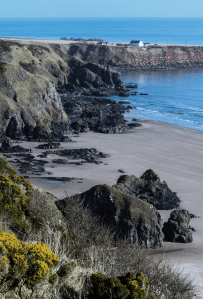
The biggest effect is actually felt by people living in coastal cities like Newcastle and Southampton, compared to inland ones like Birmingham and Leeds.
It was not sure how much of the benefit had to do with salty air.
It’s thought that it could be that the sea had a calming influence on people, or that those who lived near it had an added incentive to get out and about.
Information from the 2001 census compared the health of people in England living near the sea and far away, both in rural and urban areas.
In the census respondents were required to rate their health as ‘good’, ‘fairly good’, or ‘not good’. Nationwide, just over two-thirds (69 per cent) rated it as ‘good’.
However, those living within three miles (5km) of the coast were slightly more likely to rate their health highly, compared to those living more than 30 miles (50km) inland.
The effect extended to those living in the band 12 to 30 miles (20-50km) from the sea, although less strongly.
Researchers concluded “You don’t have to have a sea view to benefit.”
The results suggested what was important was how often people got to the coast, and how woven it was into their lives.
The study, published in the journal Health and Place, took account of variations in age and wealth between different areas’ populations.
It showed living by the sea most benefits poorer, city-dwelling people – those who, nationally, suffer the worst health and do the least exercise.
Good news for those of us lucky enough to live by the beautiful Aberdeenshire coastline. But even if you don’t, added incentive to go out and make the most of it!
Jewel In The Crown
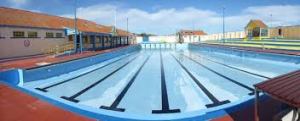 In 1930s Britain, lidos and open air pools were incredibly popular. Following a poll of Stonehaven householders in 1933, the Pool was built the following year at a cost of £9,529 and opened on 4th June 1934. Stonehaven Pool was built to competition standards, which at that time were for races of 110 yards and multiples of that, so Stonehaven Pool was, and is, 55 yards long – just a touch over 50m and 20 yards – just over 18m – wide. It was emptied and refilled every few days – at that time, filling took only 2¾ hours. Even considering operating costs and loan charges, the first season brought a large profit. Customer feedback was not all positive and so, for season 1935, not only was the sea water circulated, filtered and disinfected, it was also heated!
During the Second World War, the Pool provided recreation – and showers – for locally-based troops. Following the war, it quickly retained its former glory, and became a major attraction for visitors from a wide area including Aberdeen. Despite changing holiday habits in the 1960s and 70s, and the Pool requiring considerable work, attendances were still healthy, with 65,000 passing through the turnstiles in 1975, although that was a season of many lost days due to technical problems.
For a few seasons, the Pool was actually filled with fresh water because of problems with the sea inlet; however seawater – one of the Pool’s main attractions – was in use again for 1982, and has been used ever since. The 1980s and 90s saw a decline in numbers, seasons were cut to 8 weeks, and by the mid-1990s the Pool was threatened with closure. This prompted the founding of a community group, The Friends of Stonehaven Open Air Pool, initially to lobby for its retention. The Friends of Stonehaven Open Air Swimming Pool is now a Scottish Charitable Incorporated Organisation (SCIO) and works in close partnership with Aberdeenshire Council. While the Council operates the Pool to the highest standards, the Friends maintain, enhance and promote the Pool.
Today the Pool is the focal point of Stonehaven’s summer and is an asset not only for the town and Aberdeenshire but also for Scotland. Only one other open air pool of the era still operates in Scotland, largely serving a local population, while the Stonehaven Pool is acknowledged as a 4-star Visitor Attraction and brings visitors from far and wide.
http://www.stonehavenopenairpool.co.uk/history.html
Carers Week 11th – 17th June 2018
 Carers Week is an annual campaign to raise awareness of caring, highlight the challenges carers face and recognise the contribution they make to families and communities throughout the UK.
Quarriers – Aberdeenshire Carer Support Service are hosting a series of promotional events during Carers Week, in partnership with Aberdeenshire Library and Information Service (ALIS). Libraries will display the winning entries from the recent adult carer poetry and photography competitions and Quarriers staff will be going on tour with the central and south mobile library buses to reach out to hidden carers in rural areas. A presentation booklet of the winning entries and details on where unpaid carers can get support will be available for the public to take away. If you would like to find out the routes on their tour please visit:
Mobile Library Central – www.aberdeenshire.gov.uk/media/22122/m1-central-mar-jun-2018.pdf
Mobile Library South – www.aberdeenshire.gov.uk/media/22123/m4-south-mar-jun-2018.pdf
Can the urban forest promote mental wellbeing?
Urban trees mitigate many negative environmental impacts such as the heat island effect, flooding and air pollution, thus having many indirect health and well being benefits. However, a growing body of research tells us that urban trees or nature may have an effect on our health and mental well being too.
The research undertaken suggests that experiencing and viewing nature initiates the physiological and psychological responses that underpin recovery from stress. There was a strong belief from the participants in both the
power of the surrounding environment and trees and nature to have beneficial effects on mental well being. Only 6.5% of all participants disagreed or strongly disagreed with the statement ‘Trees and nature make me calm and relaxed’. Additionally, it was found that nearby residential trees may provide beneficial in improving mental well being for more disadvantaged socio-economic groups. All food for thought in the development of housing in the future, not only stressing the importance of affordability, but also interaction with its natural surroundings.
Thank you for your support to end child poverty
 If you haven’t already seen them, have a look at these animations. Talented students from the London College of Communication interpreted children’s experiences of poverty and made some very powerful short films. They show clearly why we’re needed, and why your support is so important.
Child Poverty Action Group
Youth Loneliness
 You’re not supposed to feel lonely while you’re young, but the truth is it’s a bigger concern among young people than any other age group.
In recent years youth loneliness and isolation has been increasingly identified as a matter of significant public concern. Research identifies that one in three young people suffer from loneliness (Red Cross, Co-op, Kantar, 2016) and 65% of 16-25 years old reporting feeling loneliness at times and 32% feeling lonely “often” or “all the time” (Majoribanks and Bradley, 2017).
“Loneliness is a recognised problem among the elderly – there are day centres and charities to help them,” says Sam Challis, an information manager at the mental health charity Mind, “but when young people reach 21 they’re too old for youth services.”
But what can young people do to combat loneliness?
While meditation techniques such as mindfulness and apps such as Headspace are trendy solutions frequently recommended for a range of mental health problems, they’re not necessarily helpful for loneliness, as they actively encourage us to dwell alone on our thoughts. You’re be better off addressing the underlying causes of being lonely first – what’s stopping you going out and seeing people?
Social media can be helpful. Helplines can also reduce loneliness, at least in the short term. One in four men who call the Samaritans mention loneliness or isolation, and Get Connected is a free confidential helpline for young people, where they can seek help with emotional and mental health issues often linked to loneliness. There are also support services on websites such as Mind’s that can remind you you’re not alone. Speak to your employer, value the interactions you have in the workplace. Counselling can be helpful. The BACP website allows you to search for counsellors in your area. “A problem aired is a problem shared and sometimes you need to talk to someone impartial and independent of your friends and family.
If recent research is to be believed, loneliness is killing the elderly and, with an ageing population, we should aim to reduce our isolation before it is too late. “Getting older doesn’t have to mean getting lonelier,” says Ruth Sutherland, the chief executive of Relate, in a new report. “But much of this rests on laying the foundations to good-quality relationships earlier in life.”

Using Schools as Community Hubs
Schools across Scotland should be used as community hubs to deliver a wide range of public services.
That’s the verdict of South Ayrshire Council and its partners following a pilot in north Ayr, which culminated in a community marketplace at Ayr Academy on 23 February.
A range of partners from NHS, Scottish Fire and Rescue service and the voluntary sector worked together to explore how this would work in practice.
Crucially, services were available to everyone living in the area – not just those with children in the schools.
Services provided included money and debt management advice, employability and skills information and advice, health and wellbeing support from school nurses and assistant nurse practitioners. Council Leader, Douglas Campbell, commented on the learning from the pilot,
“It’s been a terrific learning opportunity for all the partners involved and that’s been one of the key outcomes of this week – getting to know more about what each of us has to offer and how we can better link in and signpost to provide a more joined-up service for people.”
Read more at http://thirdforcenews.org.uk/tfn-news/schools-should-be-used-as-community-hubs#im6LrHufaQ4Ga4ce.99
Spare Chair Sunday
 Spare Chair Sunday first launched in 2015 as a partnership between national charity Contact the Elderly and Bisto. Expanding on the charity’s model of free monthly Sunday afternoon tea parties for small groups of older people aged over 75 who live alone, Spare Chair Sunday encouraged people to offer a ‘spare chair’ at their Sunday lunch tables to a Contact the Elderly older guest and their volunteer driver, to share a delicious warm lunch all together. The response to the award-winning campaign was amazing, with over 1,600 Spare Chair Sunday volunteers hosting Sunday lunches or becoming regular tea party volunteers in their local community.
Any host homes or venues must have a downstairs toilet and be easily accessible (generally we say no more than three steps where possible).
Any car used must be fully insured and drivers must hold a full driving licence, as well as supplying two references and completing a DBS check. This is for the safety and security of guests and host.
Interested? Click on http://www.contact-the-elderly.org.uk/volunteer to apply to become a volunteer. Applications are dealt with as soon as possible, but please do be patient, all necessary checks must be made. In some cases, there will not be anyone near enough to you, groups may already have as many volunteers as they require, or there may not be a group in your area. It may be the case that your application may enable work to be launched in the area for the first time, enabling more older people to benefit!
A Cupful of Sugar
Borrowing from neighbours was once a commonplace practice, part of the network of relations we once had with those who lived within close range. 
So what’s changed?
The industrial revolution brought affordable modern technology—with it quick transportation and supermarkets. In ancient times, hunting, gathering, and foraging were communal practices. And it wasn’t long ago that many cultures, especially rural ones, still relied on weekly markets, traveling salesmen, and the growing of their own goods. But living in relative isolation also meant more contact with your neighbours because one of them probably provided your weekly dairy needs and another milled wheat for flour or grew pears you exchanged for apples.
Changes in food technology, making fresh produce less perishable, extending shelf life, has decreased the interaction we have with those who live close by to help out when we are running short. Communal cooking practises regularly seen in other countries don’t feature in our society.
It’s easy to reflect on past practises with rose tinted spectacles. Changes in our food supply has brought countless benefits. However, does the growing reliance on foodbanks indicate we should re-evaluate practises long forgotten? Reconnecting with our neighbours in times of need would not only strengthen bonds within our communities but provide welcome support during difficult times. The social distance created by modern society is a symptom of our increasingly busy lives and the sprawling communities we now live in. However, it is only a short walk next door for that cupful of sugar, but the benefits to our communities can stretch much further than that.
Community Cohesion – Do ants hold the secret to human success?
 Solomon thought so, he says to ‘go to the ant’ and ‘consider the ant’ and refers to them as little upon the earth but exceeding wise. He suggests that taking a leaf from their book will preserve us from poverty and give us wisdom. Given Solomon is the richest man the world has ever known (today he would be worth 100 times more than John D Rockefeller), some ant facts are worth knowing.
So, how do ant communities do it?
1. Strong leadership
Ant communities are headed by a queen or queens, whose function in life is to lay thousands of eggs that will ensure the survival of the colony. Workers (the ants typically seen by humans) are wingless females that never reproduce, but instead, forage for food, care for the queen’s offspring, work on the nest, protect the community, and perform many other duties. When the queen of the colony dies, the colony can only survive a few months. Queens are rarely replaced and the workers are not able to reproduce. The lesson;
Without strong and clear leadership – failure is imminent!
2. Communicate & cooperate
Ants are social insects which form colonies that range in size from a few dozen predatory individuals living in small natural cavities to highly organised colonies which may occupy large territories and consist of millions of individuals. Ants communicate and cooperate by using chemicals (pheromones) that can alert others to danger or lead them to a promising food source. The lesson;
Nothing can succeed without clear communication and cooperation.
 K&M Communities