
Month: November 2019
What is Loneliness and Social Isolation?
According to research by the University of York, ‘Loneliness is a subjective feeling associated with someone’s perception that their relationships with others are deficient’ whereas, ‘social isolation is a more objective measure of the absence of relationships, ties or contact with others’. In sum the latter can be a choice.
 Ben Lazare Mijuskovic writes in Loneliness in Philosophy, Psychology, and Literature (2012) ‘man has always and everywhere suffered from feelings of acute loneliness’, however, it is important to recognise that loneliness means different things to different people. It is equally important to be cognizant of that fact that some people will feel lonely spending just a day alone, whilst others can go months with minimal social contact or communication and not experience any negative emotions. ‘Some may be socially isolated but content with minimal social contact or actually prefer to be alone’ writes Julianne Holt-Lunstad, the lead author of a 2015 report on loneliness in Perspectives on Psychological Science. ‘Others may have frequent social contact but still feel lonely.’ As the Age UK Loneliness and Isolation Evidence review also points out it is ‘possible to be isolated and not lonely, and to be lonely without being isolated’.
This is the topic of research conducted by Kiren Zubairi, and led to the hosting of a conference on Loneliness and Social isolation hosted by the Kincardine And Mearns Welfare and Wellbeing network.
We were fortunate to have Kiren Zubairi author of the Zubairi Report on Loneliness and Social Isolation coming along to share her finding from the report. This qualitative study investigates the loneliness and social isolation experienced by under-represented demographics in Scotland, who often face multiple triggers including socio-economic disadvantage, poor access to transport and a lack of places and spaces that encourage connectedness and foster belonging.
The-Zubairi-Report-VHS-Nov-2018
Over the next few weeks this blog will aim to look at this topic; what are the causes, what are the effects of this, what can we do to address this issue, and what’s happening both locally and more widely to address this ever increasing issue.
Pop back next week to find out more!
Pissoirs and PB
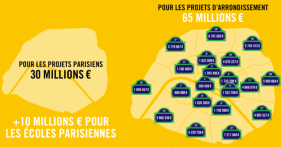 The phrase participatory budgeting (PB) is widely recognised but perhaps not fully understood – at least not in the way that it’s being practised elsewhere in the world. PB Scotland is hosting a major conference later this month at which some of the US and Canadian experience of PB will be shared. In many other countries, PB is completely normal and has been mainstreamed for years. For instance, Paris commits 5% of its capital spend (£89m) to a participatory process. That’s the equivalent of 45 euros for every citizen – no wonder Parisians engage in such numbers.
By The Guardian
Arnaud Carnet was crossing Paris on his bicycle one day when something strange caught his eye: a dilapidated old urinal stationed at the foot of the high walls of the last operational prison in the city.
This graffitied, ripe-smelling structure was far from a standard street pissoir. Carnet discovered that it was in fact the last remaining 19th-century vespasienne urinal in the city. He decided he needed to save it.
“It no longer conforms to the comfort standards of today,” he says of the urinal (an understatement). “But it’s a piece of heritage and it’s in a terrible state in the middle of the boulevard – it’s not possible to just leave it like that.”
In January, Carnet submitted a proposal to restore the vespasienne to Paris’s participatory budget scheme, which allows residents to vote on how they want the city to spend €100m (£89m) – 5% of its capital budget.
The urinal is “part of the great Parisian history of public sanitation,” he says, though he admits he’s never used it himself. “The participatory budget is an opportunity to give it a second youth.”
Carnet’s project was one of 430 that went to public vote between 6 September and 22 September this year. Sadly for him, the vespasienne was not one of the 11 major projects and 183 smaller propositions that earned enough votes to become reality. Instead, Parisians chose projects that ranged from better recycling facilities to upgraded cycling infrastructure to programmes to help women who are experiencing homelessness. Read the rest of this entry »
 K&M Communities