


 A pilot ‘Respitality’ project which began in central Aberdeenshire towards the end of last year sees local businesses asked if they would like to support the wellbeing of both young people and adults who have a caring role by offering short breaks, spa treatments, leisure passes, dining experiences and a range of other offerings either free of charge or at a discounted rate.
 A fantastic suite of offers encouraging people in Aberdeenshire to “Gie it a Go” has been launched in time for Christmas.
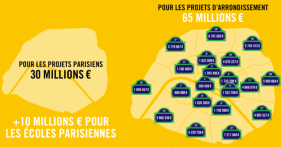 The phrase participatory budgeting (PB) is widely recognised but perhaps not fully understood – at least not in the way that it’s being practised elsewhere in the world. PB Scotland is hosting a
  In many respects a community share issue is an old idea in 21st century wrapping – the idea of raising funds by public subscription has been around for years. Most war memorials, for instance, that were erected after the First World War were funded in this way. But community shares are more than a simple donation. They offer someone a chance to ‘invest’ in a local project and sometimes even make a little return on that investment. The number of share issues has been slowly growing and recently they have been mapped. Interesting to see the range and geographic spread.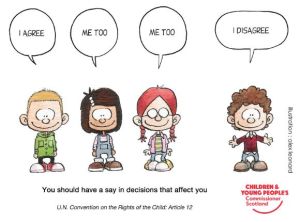
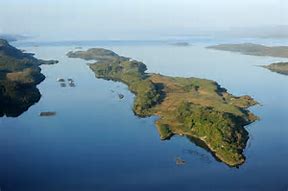 Scotland’s islands have the highest proportion of co-operatives of any part of the UK thanks to a long tradition of self-reliance, a survey has found.
Had you been taking a stroll around downtown San Francisco in late September 2005 you might have noticed something unusual – an ordinary parking space turned into a tiny park featuring a tree, a patch of grass and a bench. This miniature patch of greenery was the brainchild of three urban designers and led to an unexpected global movement known as PARK(ing) Day. Held on the third Friday of September every year, PARK(ing) Day has seen thousands of otherwise grey spaces temporarily transformed, from a spot on London’s South Bank to a sidewalk in Alaska.
The PARK(ing) Day movement captured imaginations, but it’s not the only one of its kind. Pop-up parks (PUPs) are a growing phenomenon, one that a group of urban researchers from the Royal Melbourne Institute of Technology is taking seriously. They argue that PUPs (which they define simply as ‘temporary green spaces’) have the capacity to benefit both biodiversity and the people who live in cities. The group cites several studies that have demonstrated the importance of nature for human wellbeing, including a paper in the Annual of Public Health which concluded that: ‘Taken together, the research reviewed does indicate that contact with nature can promote health. The evidence for some benefits, such as short-term restorative effects, is already quite strong.’
 A’Beckett Urban Square PUP on the City Campus of RMIT University in Melbourne [Image: J Gollings]
‘There’s a lot of underutilised space in cities, and it’s going to be increasingly key to bring nature back into cities and have it close to offices,’ says Luis Mata, lead author of the study. ‘Some PUPs might only last for a couple of hours, whereas others last for years and may even become a path to something permanent. Depending on their deign and their spatial and temporal scales some will provide more benefits for people, some for biodiversity and some for both.’
The study points to a number of PUPs already in motion. In particular, San Francisco’s ‘Pavement to Parks’ program – an initiative that seeks to transform underutilised street spaces into public plazas known as ‘parklets’. It also refers to the UK’s Design Council and its ‘Knee High Design Challenge’ funding scheme which saw a PUP project trialled in Lambeth and Southwark. The transformed spaces were designed to encourage play and were filled with games for young children.
 “Grasslands” PUP at the State Library of Victoria in Melbourne [Image: M Stanton]
To address the lack of research into such spaces, the researchers want to see future sites become ‘socioecological laboratories’ in which urban planners conduct experiments to inform future design. Leading the way, Mata and his colleagues carried out their own analysis on a PUP in their home-town of Melbourne. They found that the six-week project called ‘Grasslands’, installed at the State Library of Victoria, saw insect pollinator abundance increase by around 160 per cent while the PUP was present.
The human impact of these spaces is harder to evaluate precisely. Nevertheless, the researchers contend that in dense urban environments with plenty of small, underutilised spaces, PUPs can help people spend time in nature, as well as foster community and in particular, creativity. ‘Creative thinking is sometimes lacking in academia,’ says Mata. ‘This new movement of people with artistic minds thinking of putting nature into cities is really excellent and is something that PUPs are uniquely placed to take advantage of.’

 Legislation has been officially lodged at the Scottish Parliament to ensure free access to sanitary products for all women. Labour MSP Monica Lennon said her member’s bill aimed to make Scotland a “world leader” in tackling period poverty. It would make it a statutory requirement for schools, colleges and universities to provide such items. The Scottish government has pledged £4m to boost provision in public buildings.
 As most of you will know, the Bettridge Centre is an important local community-owned and managed facility which offers a wide selection of activities for the whole community and for visitors. Some public consultation has already taken place and the centre has commissioned Community Enterprise to build on that positive momentum with more detailed local research. The core aim is to find out what is needed in the community and use that to set out a plan to upgrade the building to meet the needs of Newtonhill and the surrounding area.
 Community Choices is about local people coming together to decide how public money
 K&M Communities