
inclusion
Have a healthy Christmas
 Christmas is a time of giving and receiving, spending time with friends and family and maybe overindulging just a little bit?
Here are our top tips to ensure you don’t start 2018 with that sinking feeling of too much Christmas pudding being the final straw;
- Don’t sit down all day – go for a walk, kick a football about, ride a new bike. Not only will this aid digestion, but help you sleep better too.
- Go easy on the booze
- Don’t give yourself a Christmas stuffing! Recent research suggests that we consume around 3,000 calories in our Christmas dinner – more than the entire recommended daily intake for a grown man!
- Keep colds at bay
- Don’t stress – ’tis the season to be jolly remember
- Eat fruit – even the clementine tucked in the bottom of your stocking will boost vitamin C warding coughs and colds.
- Do something for others – do you have an elderly neighbour who would love to share some festive spirit?
- Engage your brain – play games, do a crossword, not only does this keep your mind active but can be fun for the whole family

Don’t Try This At Home.
It’s never too late to rectify those ill-fated New Year’s Eve resolutions in which you swore to lead a healthier life. But if traditional spas leave you cold and meditation bores you, don’t worry, there are plenty of other options out there.
- Prison pampering, Thailand
While a visit to a Thai correctional institution may scream holiday hell rather than whisper wellness, in Chiang Mai a trip to prison is an unorthodox experience.
Inmates at the women’s correctional institution are given holistic training that will aid job prospects once released. They pamper visitors using the skill learned. It not only soothes aches and pains, but any tips earned are kept for prisoners on their release.
- Wine Spa Japan
At the end of a hard week, for many people one of the best ways to relax and unwind is with a glass or two of red wine.
But why not go one step further than drinking the stuff, and book a trip to the Yunesson Spa Resort in Japan?
It’s a self-described ‘spa theme park’ where you can legitimately bathe in hot tubs filled with Merlot or Bordeaux.
- Laughter Yoga
Invented by Indian doctor Madan Kataria in the mid-Nineties, laughter yoga now has thousands of devotees. Many sessions, are free for anybody to join, providing newcomers don’t mind an early start. Propelled by the philosophy that laughter gives humans huge spiritual and medical benefits, its main objective couldn’t be simpler – to set you’re giggling, howling, chortling and smirking instincts free.
- Buried Alive; a shamanic death & rebirth
With hopes of experiencing a closer connection with Mother Nature, pilgrims journey to the northwest coast of the US to take part in a shamen led burial ceremony.
Free spirited individuals are taken into the wilderness and covered fully with earth. After re-emerging individuals are said to feel a deeper connection and knowledge of spirit and creation.
http://thepracticalshaman.com/buried_alive/
- Cryotherapy, Slovakia
Nothing shouts health kick like freezing bits off in temperatures of -120c. Sportsmen and women have been using cryotheraphy to aid recovery for decades but now the public can don gloves, a face mask and step into a giant fridge.
Benefits are said to include the natural productions of enzymes and hormones as endorphins, adrenaline and testosterone are released. It’s the coolest wellness trend in town.
Linking Generations
 Connections between generations are proven to enrich the lives of both young and seniors in long-lasting and meaningful ways.
When young people find ways to engage and develop relationships with the elderly, these experiences can build self-esteem, develop leadership skills, and encourage a lifelong commitment to volunteering.
For seniors, intergenerational connections provide the opportunity to transfer knowledge and wisdom, acknowledge self-worth, and feel they are contributing members of society.
In today’s world, many young people are experiencing less interaction with seniors because of homogenous neighborhoods, dispersed extended families, and increasing segregation of seniors living in care facilities or in isolation
Some of the benefits of intergenerational work include:
- Creation of age friendly communities.
- All generations have a lot to both teach and learn from each other and contribute to lifelong learning.
- Tackles issues around stereotyping and ageism.
- Increases understanding and respect between older people and younger people.
- Chance to make new friends and combats social isolation.
Mental Muscle
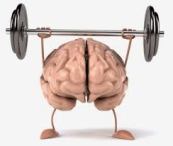
Mentally strong kids turn into resilient adults who are equipped to tackle whatever life throws their way. Challenges, hardship, and setbacks are inevitable. Teaching kids to build mental muscle can make them resilient. It’s also the key to helping them reach their greatest potential in life.
Here’s three things you can do to help equip your kids for the future.
- Teach your kids to think realistically
Children need to develop healthy self-talk. Simply thinking positive isn’t the solution, this doesn’t prepare children for real-life challenges. A child who can reframe negative thinking by coming up with a solution is more resilient. For example, instead of saying I’m going to fail that physics test, a resilient child will tell herself I can pass this test by
Teach children to challenge their negative thoughts and prove themselves wrong.studying hard and asking for help.
- Teach your kids to manage their emotions
A national university students found that more than 60 percent of young people don’t feel emotionally prepared for the realities of life. They lack the skills to deal with uncomfortable emotions, like loneliness, sadness, and anxiety.
It’s important to educate kids about their emotions and how those emotions influence them. A child who can say, “I’m feeling anxious and that anxiety makes me want to avoid scary things,” will be better equipped to face his fears. He’ll also have a better understanding of how to cope with his emotions and he’ll have more confidence in his ability to handle discomfort. Validate your children’s emotions and teach them they have choices in how they deal with their feelings.
- Teach your kids to take positive action
Thinking realistically and feeling good are only half the battle. Kids also need to take positive action. Unfortunately, many parents are quick to rescue kids from their struggles. Or they micromanage their daily activities. And consequently, kids don’t learn to make healthy choices on their own.
Proactively teach your kids problem-solving skills. Show them they have the power to make a difference in their lives and in other people’s lives.
Flex your mental muscles, it’s worth it.
U3A (The University of the Third Age)
…is a UK-wide movement which brings together people in their ‘third age’ to develop their interests and continue their learning in a friendly and informal environment.
If you’re wondering what we mean by the third age – it is a time after you have finished working full-time or raising your family and have time to pursue your interests or just try something new.
As you get older, keeping your mind active and healthy can become a big challenge, but it’s well documented that keeping your mind active has a direct impact on physical health too.U3A has a ‘university’ of members who draw upon their knowledge and experience to teach and learn from each other but there are no qualifications to pass – it is just for pleasure. Learning is its own reward.
It’s all voluntary; a typical U3A will be home to many activity groups covering hundreds of different subjects – from art to zoology and everything in between.
Formed over 30 years ago, there are now over 1,000 U3As across the UK, with thousands of interest groups between them and more than 400,000 members nationally – plus it’s growing every day.
Want to join, click here https://www.u3a.org.uk/find
“We never had so much need of storytelling and its healing powers.” George Mackay Brown
Storytelling activities provide opportunities for the socially and educationally excluded to take part in cultural experiences that provide a platform for a sense of community, inclusion, and understanding. We all have a story to tell, and storytelling can provide a valuable means of self-expression and communication, as well as building confidence and self-esteem and combating feelings of loneliness and isolation.
Handmade Tales
Handmade Tales was an eight-week project that offered carers and those experiencing mental health problems some ‘time out’ in the form of storytelling sessions. Facilitated by storyteller Claire Hewitt, these Handmade Tales sessions gave the carers the opportunity to socialise with people going through similar experiences, have some much needed ‘me time’ and find a voice to tell their own stories. This helped them to reconnect and rebuild stronger relationships with family and friends – especially with the person the care for.
 Claire led participants through a programme of storytelling and arts and craft activities all linked to the theme of spring. Whilst the hands were busy felting, stitching, thumping clay or making bread, stories were shared. Storytelling and the accompanying handwork gave participants the skills to express who they are, help them reconnect with forgotten dreams and celebrate life and the growth of something new. These sessions gave the carers the opportunity just to have a break away from their caring role, and act as a reminder that they too are important and they need to look after themselves.
This project was in collaboration with Support in Mind Scotland and the Scottish Storytelling Centre and supported by the Scottish Government ‘Short Breaks Fund.
What does “wellbeing” mean to you?
Welcome to the second of Kincardine and Mearns local community plan priorities.
Communities, both place-based and people sharing a common identity or affinity, have a vital contribution to make to health and wellbeing. Community life, social connections, supportive relationships and having a voice in local decisions are all factors that underpin good health, however, inequalities persist and too many people experience the effects of social exclusion or lack social support. Participatory approaches directly address the marginalisation and powerlessness caused by entrenched health inequalities.

The assets within communities, such as the skills and knowledge, social networks, local groups and community organisations, are building blocks for good health. Many people in Kincardine & Mearns already contribute to community life through volunteering, community leadership and activism. Community empowerment occurs when people work together to shape the decisions that influence their lives and health and begin to create a more equitable society. This is not about a DIY approach to health; there are important roles for NHS, local government and their partners in creating safe and supportive places, fostering resilience and enabling individuals and communities to take more control of their health and lives.
Over the next few weeks we will share with you some stories about wellbeing and what it means to a variety of people. Look out for our first blog next week.We hope you enjoy
Be Active
If you were told by a Dr – take this magic pill daily and you will reduce numerous health risks, be fit and healthy……would you take it? Unfortunately the wonder pill doesn’t exist, however in its place we are going to prescribe everyone regular physical activity/exercise and put you on the path to the same results. A little motivation can go a long way.
Walking: the most accessible and easiest way for most to incorporate exercise into our lifestyles. It’s free, gentle &low-impact that requires no special training or equipment. Almost everyone can do it, anywhere and at any time. You could join a health walk, become a rambler or just walk to the shops. Check out the Aberdeenshire Council Ranger Service to find out about the rich natural heritage surrounding us.
If walking isn’t your thing, how about cycling? You could go for the standard cycle or try out an electric bike. Electric bikes (e-bikes) work much the same as ordinary bicycles except they have an electric motor which works when you pedal to give a bit of a boost, making going uphill a lot easier! You don’t need a special license to ride one (as long as you are over the age of 14) and the bikes can be used on cycle paths the same as ordinary bicycles.
Talking of cycle paths, Aberdeenshire Council transport strategy team have just finished new local ‘Walking & Cycling maps’ for several Aberdeenshire towns which are to be launched soon. We are also hearing whispers of ‘Treasure Trails’ which sounds interesting, and as far as we are concerned – anything that encourages us to get out and about is a winner in our eyes. Want to know more? Visit http://getabout.org.uk/ for more information.
Tell us what would make you more active in your community. Is there a path near you which could be a great walking route, perhaps you would like to be able to commute to work by bike? We’d love to hear from you at kandmcommunities@gmail.com
Cornerstone
 Cornerstone, an award winning and pioneering Scottish charity is looking to recruit new Board members to be part of our transformational and pioneering journey to transform social care in Scotland. www.cornerstone.org.uk
What we are looking for:
Essential:
People with the passion to make a difference
Pioneering individuals who want Cornerstone to thrive
People with an understanding of what it means to be a Director of a company – both the responsibility and the privilege
Desirable:
We are particularly looking for people who have public sector experience in commissioning, health or social care policy and/or the planning and influencing of change in social work practice .
We would love to hear from people based in areas out with Aberdeen
As we are an organisation that embraces diversity we would love to hear from you if you are female, a person with a disability or someone from any other minority group
We are also interested in people who have experience of being cared for or supported by Cornerstone either the person themselves or a family member
If you would like to find out more please contact Edel Harris CEO or Peter Nicholson Chair of the Board on edel.harris@cornerstone.org.uk or 01224 256001
Scottish Association for Mental Health (SAMH) World Café.
SAMH are holding an event in Stonehaven on Wednesday 26 July from 1100 – 1400. The event is aimed  at professionals supporting clients with mental health needs, and clients, and is relevant to adult services only (16 – 65 years). Participants should be willing to take part in discussions and share their lived experiences of mental health services. If you would like to attend, please contact enquiries@mylifedynamic.org.uk and let them know if you will be taking along any clients on the day.
Paths for All’s Big Fit Walk campaign
 The Big Fit Walk is now in its 14th year. Its aim is simple. We want to inspire communities across Scotland to come together for a walk to celebrate the benefits of being active. It’s about having fun and staying healthy, anyone can host or attend a Big Fit Walk during the month of June! The Big Fit Walk is a fun and social way to show people the joy of a short walk. Whether you are looking to showcase an area in your community, get your workplace or school more active, or recruit new walkers to your Health Walk, the Big Fit Walk is a simple and easy way to put short local walks on the map in Scotland. Paths For All provide Health Walk groups, community groups, workplaces, schools and others with free resources to organise their own 30 minute local led walk during June. From posters and invites to get people along to your walk to a guide on running a successful walk, our pack has all the resources you will need to make your Big Fit Walk a success! To order your Big Fit Walk resource pack or download resources please visit: http://www.pathsforall.org.uk/bigfitwalk
Scottish Government Consultation Hub
 The Scottish Government wants to make it as easy as possible for those who wish to express their opinions on a proposed area of work to do so in ways which will inform and enhance that work. They have a consultation hub on their website where you can view and take part in consultations as well as see consultations that have already been archived. Visit the hub here: https://consult.scotland.gov.uk/
 K&M Communities